Eurovision expands to Asia, Bangkok set to host the first-ever Eurovision Asia
Eurovision is set to make history in Asia, with Bangkok, Thailand, scheduled to host the first Eurovision Asia Song Contest on November 14, 2026, marking a major expansion of one of the world's most recognised music competition brands.
Main Points
- Bangkok will host the first-ever Eurovision Asia Song Contest on November 14, 2026.
- Nine countries have confirmed participation, led by Southeast Asian nations.
- Organisers hope the contest will boost cultural exchange and showcase Asia’s diverse music scene.
Eurovision is set to make history in Asia, with Bangkok, Thailand, scheduled to host the first Eurovision Asia Song Contest on November 14, 2026, marking a major expansion of one of the world's most recognised music competition brands.
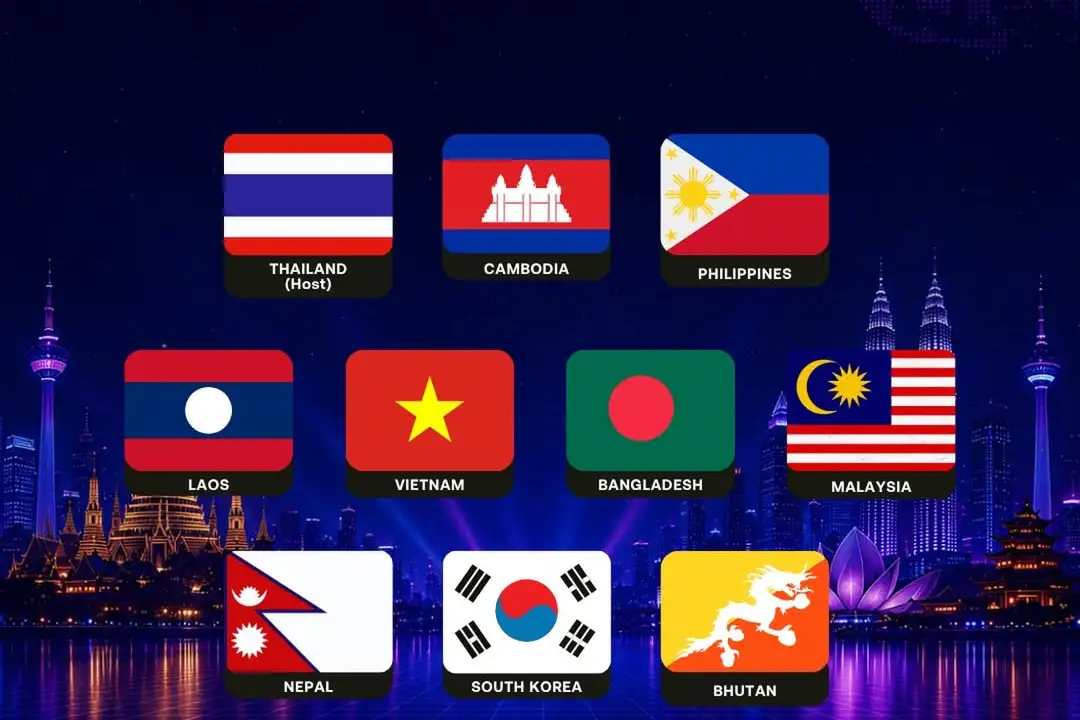
According to information shared by Eurovision Asia 2026 and visualised by Seasia Stats and World Visualized, nine countries have so far been confirmed for the inaugural event: Thailand, Cambodia, the Philippines, Laos, Vietnam, Bangladesh, Malaysia, Nepal and South Korea.
Thailand will host the competition, placing Southeast Asia at the centre of a new regional music event inspired by the long-running Eurovision Song Contest in Europe.
The original Eurovision Song Contest, organised by the European Broadcasting Union (EBU), has been held annually since 1956 and has grown into one of the world's largest live entertainment events, attracting hundreds of millions of viewers globally.
The Asian edition aims to adapt the Eurovision format for the region, allowing participating countries to showcase original music while competing for continental recognition.
Industry observers say the contest could provide a major platform for emerging Asian artists and strengthen cultural exchange through music.
The list of confirmed participants is dominated by Southeast Asian nations, reflecting the region's vibrant music industries and large digital audiences.
South Korea's inclusion is expected to attract significant international attention given the global popularity of K-pop, while countries such as the Philippines and Vietnam bring rapidly growing music markets and strong online fan communities.
Analysts say the competition could help boost tourism, entertainment exports and regional collaboration.
The launch of Eurovision Asia comes as international music contests increasingly seek new audiences beyond traditional markets.
With Asia home to more than half of the world's population and some of its fastest-growing entertainment industries, organisers see significant potential for the format's expansion.
This story is written and edited by the Global South World team, you can contact us here.