Nearly all people in Tajikistan hold at least one gender bias against women
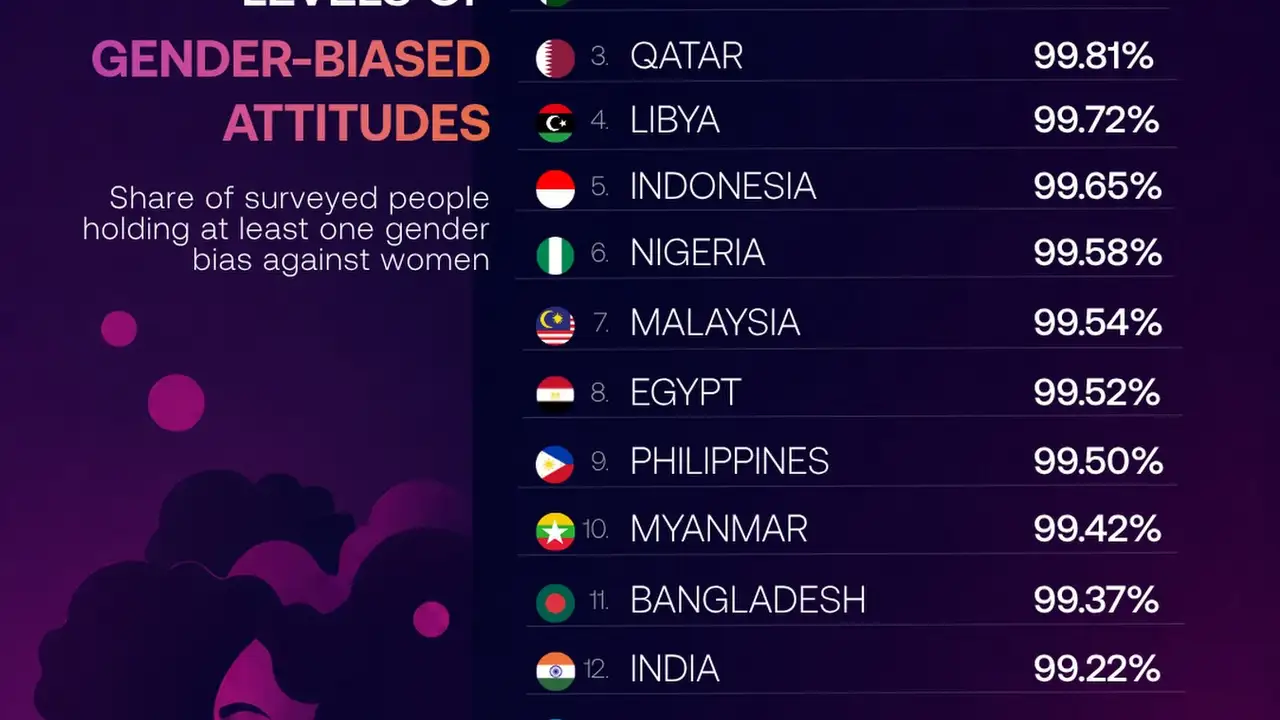
More than 99% of people in several countries hold at least one gender bias against women, according to the United Nations Development Programme's (UNDP) Gender Social Norms Index (GSNI) 2023, highlighting the persistence of discriminatory attitudes despite decades of progress in education, employment and political participation.
Main Points
- Tajikistan recorded the world's highest level of gender bias
- Nearly all respondents held at least one bias against women
- UNDP says gender stereotypes continue to slow equality
More than 99% of people in several countries hold at least one gender bias against women, according to the United Nations Development Programme's (UNDP) Gender Social Norms Index (GSNI) 2023, highlighting the persistence of discriminatory attitudes despite decades of progress in education, employment and political participation.
The GSNI measures the share of people expressing at least one bias against women using responses from the World Values Survey. It examines attitudes across four areas—political leadership, education, economic participation and physical integrity—to assess how social norms shape gender equality.
Tajikistan recorded the highest level of gender bias, with 99.92% of respondents holding at least one biased view about women. It was followed by Pakistan (99.89%), Qatar (99.81%), Libya (99.72%) and Indonesia (99.65%).
The remaining countries in the top 15 were Nigeria (99.58%), Malaysia (99.54%), Egypt (99.52%), the Philippines (99.50%), Myanmar (99.42%), Bangladesh (99.37%), India (99.22%), Rwanda (99.15%), Iraq (98.98%) and Ghana (98.97%).
RECOMMENDED FOR YOU
Six countries account for three-quarters of Europe’s unicorn startups
According to the UNDP, a person is classified as holding a gender bias if they agree with at least one statement suggesting that men make better political leaders, deserve jobs more than women when employment is scarce, make better business executives, or are more entitled to university education than women. The index also includes attitudes related to women's reproductive rights and the acceptability of intimate partner violence.
The report found that nearly nine in ten people globally still hold at least one bias against women, while almost half of respondents believe men make better political leaders than women. Around 40% think men are better business executives, and more than a quarter believe it is justifiable for a man to beat his wife under certain circumstances.
UNDP says these deeply rooted social norms continue to slow progress toward gender equality, even in countries where women have gained greater access to education and employment. Biases influence hiring decisions, wages, political representation and the unequal distribution of unpaid care work.
The agency notes that improvements in legal rights alone are often insufficient. Lasting change requires reforms in education, media representation, workplace policies and political institutions, alongside efforts to challenge stereotypes that limit opportunities for women and girls.
The Gender Social Norms Index draws on data from the World Values Survey, covering countries that together represent the vast majority of the world's population. UNDP uses the findings to monitor progress toward Sustainable Development Goal 5, which aims to achieve gender equality and empower all women and girls.
This story is written and edited by the Global South World team, you can contact us here.