What six prime ministers in 16 years reveal about Britain
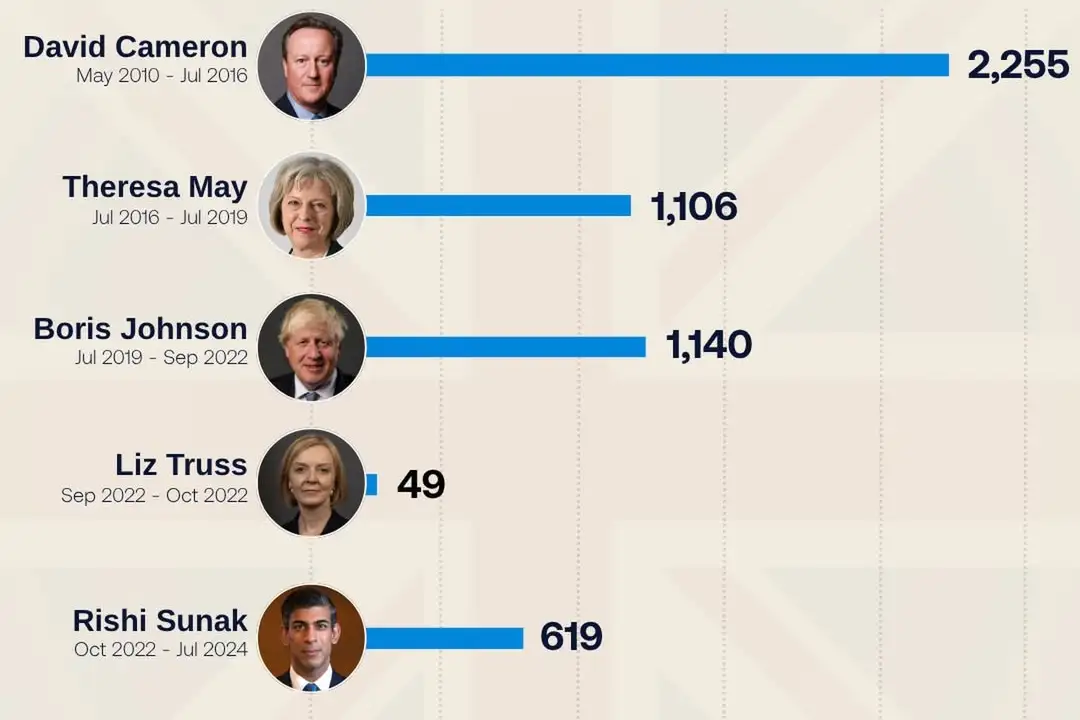
The United Kingdom has been led by six prime ministers since 2010, a period marked by Brexit, political upheaval, economic shocks, and rapidly changing leadership at Downing Street.
Main Points
- Britain has had six prime ministers since 2010, highlighting political instability.
- David Cameron spent 2,255 days in office, the most of any UK prime minister since 2010.
- Liz Truss lasted just 49 days, the shortest premiership in modern UK history.
The United Kingdom has been led by six prime ministers since 2010, a period marked by Brexit, political upheaval, economic shocks, and rapidly changing leadership at Downing Street.
Data compiled from UK Government records shows former Conservative leader David Cameron remains the longest-serving British prime minister of the period, spending 2,255 days in office between May 2010 and July 2016. Cameron resigned following the Brexit referendum, triggering a decade of political change that reshaped British politics.
Since then, Britain has seen an unusually rapid succession of leaders. Theresa May served 1,106 days as she struggled to deliver Brexit, while Boris Johnson remained in office for 1,140 days before resigning amid political scandals and cabinet resignations.
Liz Truss recorded the shortest premiership in modern British history, lasting just 49 days in 2022 after financial markets reacted negatively to her government's economic plans. She was succeeded by Rishi Sunak, who served 619 days before Labour returned to power in the 2024 general election.
Keir Starmer entered Downing Street in July 2024 after leading Labour to a landslide election victory that ended 14 years of Conservative rule. His government pledged to restore stability and rebuild public trust after years of political turbulence.
According to reports published on June 22, 2026, Starmer announced his resignation, becoming the sixth British prime minister to leave office in just over a decade. His departure continues a period of leadership turnover rarely seen in modern British politics.
Political analysts say the rapid changes reflect the pressures created by Brexit, economic uncertainty, leadership challenges and growing voter dissatisfaction. Since Cameron's departure in 2016, every British prime minister has faced significant political crises that ultimately shortened their time in office.
While Britain remains one of the world's oldest parliamentary democracies, the frequent changes at the top have highlighted the challenges of maintaining long-term political stability in an increasingly fragmented political landscape.
British Prime Ministers Since 2010 (Days in Office)
As Britain prepares for another leadership transition, the next occupant of Number 10 Downing Street will become the country's seventh prime minister in roughly a decade, underscoring one of the most politically volatile periods in modern UK history.
This story is written and edited by the Global South World team, you can contact us here.