Before the fall of Maduro: A history of U.S. involvement in regime change
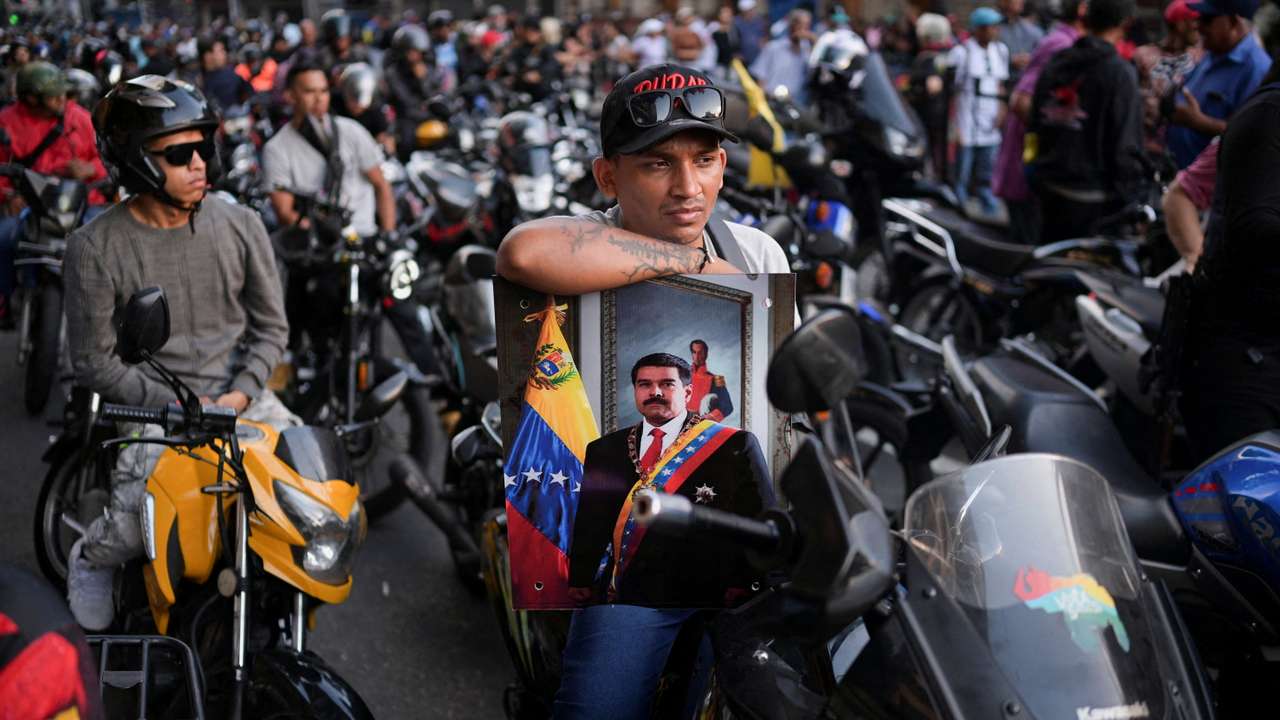
In the early hours of 3 January 2026, U.S. special forces carried out a direct military operation in Venezuela that ended with President Nicolás Maduro and his wife, Cilia Flores, in custody.
The operation included coordinated airstrikes in Caracas and naval deployments along the Venezuelan coast. President Donald Trump later described it as a “flawless” mission and said there were no American casualties.
Maduro was removed from power and flown out of the country to face drug trafficking and narco-terrorism charges led by U.S. Attorney General Pam Bondi. The U.S. government said Maduro was the head of a transnational criminal enterprise.
“We’re going to run the country until such time as we can do a safe, proper, and judicious transition,” Trump said. “We can't take a chance that somebody else takes over Venezuela.”
In the hours that followed, Venezuela’s Supreme Tribunal of Justice appointed Vice President Delcy Rodríguez as interim president. Much of the existing government structure remained in place.
RECOMMENDED FOR YOU
Six countries account for three-quarters of Europe’s unicorn startups
Years of pressure on Venezuela
The operation did not come out of nowhere. It marked a major moment in a long U.S. effort to shape Venezuela’s political future.
In 2019, the Trump administration backed opposition leader Juan Guaidó as interim president and imposed heavy economic sanctions as part of what it called a “maximum pressure” strategy.
By late 2025, reports said the CIA had been authorised to carry out covert operations inside Venezuela, pointing to a sharper push to remove Maduro. The U.S. has also been linked to the failed 2002 coup against then-President Hugo Chávez, though Washington has disputed the extent of its involvement.
Venezuela’s oil wealth has remained a key issue. The country holds an estimated 17% of global oil reserves. Trump has said U.S. companies would play a central role in rebuilding the energy sector.
“We’re going to have our very large United States oil companies… go in, spend billions of dollars, fix the badly broken infrastructure… and start making money for the country,” he said.
A familiar pattern
Maduro’s removal places Venezuela among many countries where the U.S. has pursued regime change.
Since 1947, the United States has been involved in about 100 regime-change operations, according to estimates by scholar Jeffrey Sachs. These efforts have ranged from open military action to covert political and economic interference, often targeting governments seen as hostile to U.S. interests.
Early interventions before the Cold War
U.S. involvement in regime change began long before modern geopolitics.
RECOMMENDED FOR YOU

Madagascar Roundup: Child food poverty hits 77%, growth rebound forecast for 2027 and northern risk mapping begins
In 1893, American-backed groups overthrew Queen Liliʻuokalani in Hawaii, a move that later led to U.S. annexation. From 1912 to 1933, U.S. forces occupied Nicaragua and took control of key parts of the government and economy.
During the “Banana Wars” between 1903 and 1925, Honduras experienced repeated U.S. military interventions that helped install or protect governments friendly to American business interests.
World War II and occupation politics
During World War II, U.S. forces played a direct role in defeating fascist governments in Germany, Italy, and Japan.
After the war, American-led occupations reshaped political systems in South Korea from 1945 to 1948 and in Austria from 1945 to 1955.
Cold War coups and covert actions
The Cold War era saw a sharp rise in secret operations.
In Iran in 1953, Operation Ajax removed Prime Minister Mohammad Mosaddegh and restored the Shah. A year later in Guatemala, the CIA’s Operation PBSuccess overthrew elected President Jacobo Árbenz.
In 1963, the U.S. supported a coup against South Vietnam’s President Ngo Dinh Diem, who was later assassinated. In Chile, U.S.-backed economic pressure helped set the stage for the 1973 coup that removed President Salvador Allende and brought Augusto Pinochet to power.
In 1989, the U.S. invaded Panama under Operation Just Cause and removed President Manuel Noriega.
RECOMMENDED FOR YOU

Russia signs BRICS Pay and technology deals in New Delhi
Post-9/11
After the 11 September attacks, U.S. military action took on new urgency.
In 2001, the U.S. invaded Afghanistan to dismantle Al-Qaeda and remove the Taliban. Two years later, it led a coalition into Iraq, overthrowing Saddam Hussein over claims of weapons of mass destruction.
In 2004, the U.S. played a direct role in the departure of Haiti’s President Jean-Bertrand Aristide, who later said he was forced out. In Libya in 2011, U.S. and NATO airpower backed rebels who overthrew and killed Muammar Gaddafi.
That same year in Egypt, the U.S. withdrew support for President Hosni Mubarak during mass protests and encouraged a political transition.
This story is written and edited by the Global South World team, you can contact us here.
