Canadian universities aim to attract top global scholars with funding boost
By Wa Lone
Canada is trying to lure top global researchers with the help of new federal funding and immigration reforms just as U.S. campuses battle funding cuts from the Trump administration.
So far, only a handful of prominent professors have made the move north from the United States since the administration's crackdown on universities began this year. But Canadian schools hope Ottawa's C$1.7 billion recruitment effort can attract international researchers that have for decades favored U.S. universities with deeper pockets and larger research budgets.
Since returning to office in January, Trump has cut or threatened to strip funding in a pressure campaign aimed at bending institutions of higher education to the policies of his administration, including dismantling diversity, equity and inclusion initiatives.
Canada's Industry Minister Melanie Joly said the government was "doubling down" on its support for world-class research.
"Certain countries are turning their backs on academic freedom and cutting research and weakening science," she said at a press briefing in Montreal on Tuesday. "We are not doing that."
Joly said the campaign to recruit academics was global and would target French-speaking experts in particular, but that officials were well aware "there are researchers south of the border who have already raised their hands and who are interested."
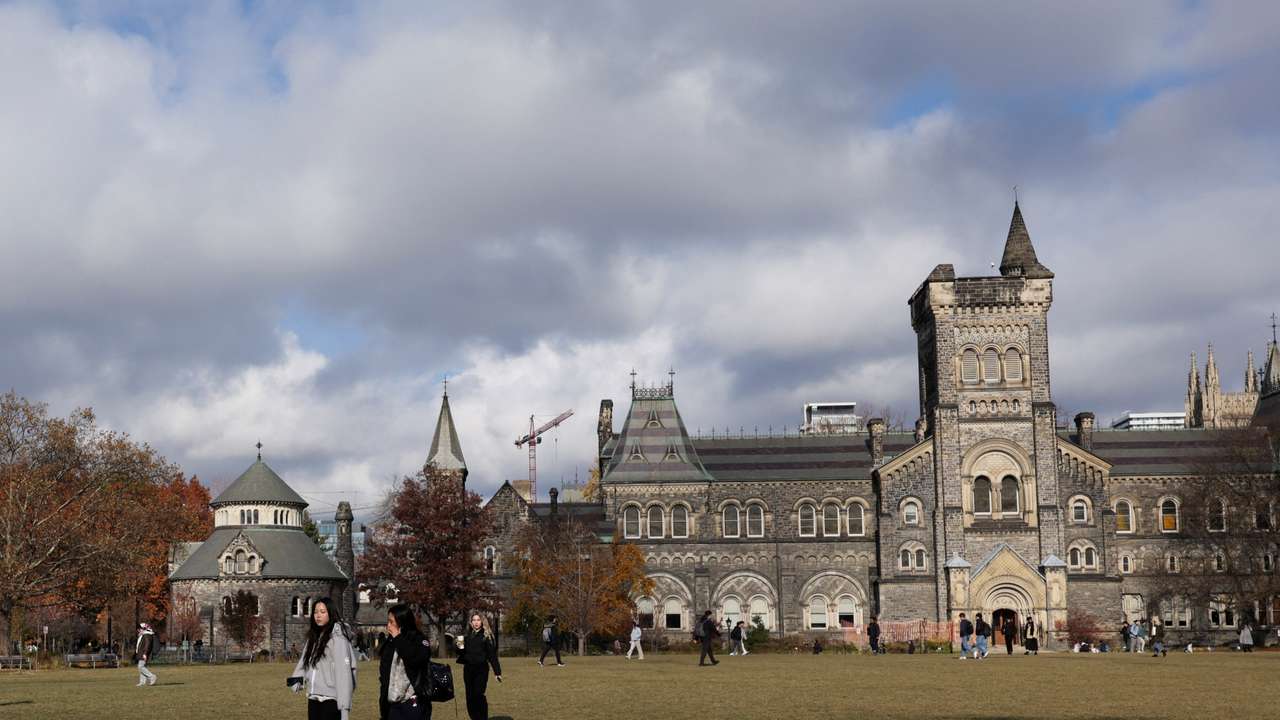
Sara Seager, a Canadian astrophysicist and professor at the Massachusetts Institute of Technology, is among those leaving - she will join the University of Toronto in September.
“There (are) many reasons why I’m returning to Canada, and one of them is the budget cuts and also the huge uncertainty in science funding in the U.S.,” Seager told Reuters.
Four of Canada’s leading universities told Reuters they are stepping up efforts to recruit top academic talent from abroad in response to Prime Minister Mark Carney's budget plan to attract over a thousand highly qualified international researchers over the next decade or so to make the country more competitive.
"It's all part of the Canadian strategy to leverage this once in a lifetime opportunity," Melanie Woodin, the president of the University of Toronto, told Reuters, referring to the additional funding in the budget.
UNCERTAINTY ON US CAMPUSES
Even before Carney's proposal, the University of Toronto opened 100 new postdoctoral positions for researchers in fields from climate science to quantum computing over the next two years.
Seager, who was hired independently of that initiative, said budget cuts at MIT, which has rejected adhering to Trump administration policies to get preferential funding, have forced some researchers to scale back or abandon projects. Her decision to leave has prompted colleagues to consider similar moves, she said.
MIT declined to comment on faculty departures. It said in an emailed statement that it continues to attract top talent and pursue strategic hiring across the institute.
Last month MIT’s president warned the school faces a $300 million annual budget shortfall, citing a new federal tax on investment returns hurting its endowment and potential cuts to U.S. research funding.
LOSING TOP TALENT TO THE US
In Canada, McMaster University and the University of Alberta said they welcomed the new Canadian federal funding and hope to expand international recruitment of professors.
The University of British Columbia said it has hired more than 100 scholars globally in recent years and expects federal support to amplify those gains. Western University in Ontario has highlighted recent high-profile hires and new programs to attract PhD students and expand postdoctoral fellowships.
Even as it cuts overall immigration levels over an uproar over cost of living issues, Canada's government included a fast-track pathway for current and former U.S. H-1B visa holders in tech, research and healthcare in its 2025 budget.
Starting in 2026, Canada's immigration agency will exempt master's and doctoral students from its recently tightened international student permit cap. The agency told Reuters it will accelerate visa processing for PhD applicants and their families to 14 days.
However, Canada has historically struggled to keep talent. A November report by the Institute for Canadian Citizenship and the Conference Board of Canada found that highly-educated immigrants are leaving at nearly twice the rate of those with lower skills, often within five years of arrival, largely due to stagnant incomes.
Drew Fagan, a public policy professor at the University of Toronto’s Munk School who is currently a visiting professor at Yale University, said Canada has long hoped for waves of U.S. scholars moving north. While Carney's effort to attract top talent is timely, often Canada loses its best and brightest to the United States where salaries are higher, Fagan said.
"The quantity of people who move to the United States from Canada is not at historic highs by any means... but the quality of those people who move to the United States is very high," he said.
Minister Joly said she hoped the new campaign would help reverse the brain drain Canada has seen in previous decades and appealed to Canadians working abroad to return home.
"To all the researchers around the world who are looking to move, we should be your first choice," she said.
This article was produced by Reuters news agency. It has not been edited by Global South World.