Deadly floods bring Asian countries' green policies under scrutiny
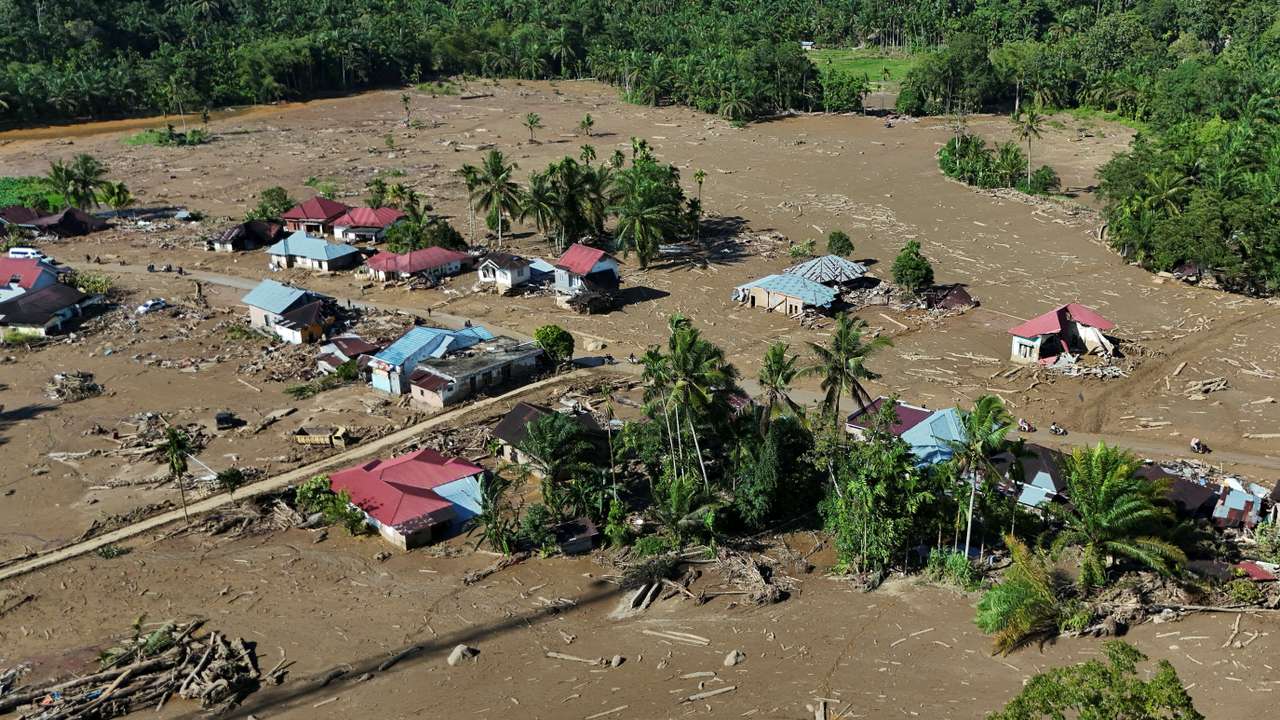
Southern Asia is facing one of its toughest flood seasons in years, as extreme weather batters multiple countries and exposes gaping holes in disaster preparedness and environmental protection.
More than 1,400 people have been killed across Indonesia, Sri Lanka and Thailand, with over 1,000 still missing. Indonesia has villages cut off after bridges and roads collapsed. Sri Lanka is struggling to restore clean water in several provinces. In Thailand, Prime Minister Srettha Thavisin has acknowledged gaps in the government’s response.
Other parts of the region are under strain as well, with Malaysia witnessing thousands displaced by repeated floods, while Vietnam and the Philippines have each endured a succession of storms and landslides that have killed hundreds this year.
Scientists say the scale of the destruction is consistent with long-term climate trends.
The World Meteorological Organization reported that record-high carbon dioxide levels in 2024 accelerated global heating, driving more severe storms this year. Asia is warming nearly twice as fast as the global average, and warmer oceans are feeding storms that now form more quickly and arrive later in the year.
“Storms may not be more frequent, but they are becoming more intense and unpredictable,” said Benjamin Horton of the City University of Hong Kong.
Those shifts are overwhelming governments. The Asian Disaster Preparedness Center notes that countries in the region still emphasize response over prevention, leaving them with shrinking lead time as extreme weather becomes more volatile.Indonesia is vowing to revoke mining permits for companies that broke environmental rules after the deadly floods in Sumatra. In the Philippines, a sweeping probe into anomalous flood-control projects has already triggered congressional resignations and Cabinet reshuffles. Since 2022, nearly 9,900 flood-control works in the Philippines have come under scrutiny after reports that many were “ghost projects,” substandard, overpriced or left unfinished.
In Sri Lanka, unregulated hillside development has contributed to deadly landslides in plantation areas. In Indonesia, satellite data show Aceh, North Sumatra and West Sumatra have lost more than 19,000 square kilometres of forest since 2000 — a level of deforestation that researchers say likely intensified recent floods.
Vietnam estimates more than $3 billion in losses from storms and flooding this year. Thailand reports at least $47 million in agricultural damage since August, with major flooding in the south potentially costing more than $780 million. Indonesia’s finance ministry puts its average annual disaster losses at $1.37 billion.
For countries like Sri Lanka, the burden is especially heavy: it contributes little to global emissions yet is among the most exposed to climate impacts, while still grappling with high foreign debt.
At the COP30 summit in Brazil last month, governments pledged to triple adaptation funding and target $1.3 trillion annually in climate finance by 2035. But developing nations argue the commitments fall far short of what’s needed — and past pledges have often gone unfulfilled.
Climate analysts say Southern Asia is nearing a critical point. The region is expanding renewable energy, but its continued dependence on fossil fuels and resource extraction leaves communities increasingly vulnerable as the floodwaters rise.
This story is written and edited by the Global South World team, you can contact us here.