Ethiopia’s Hayli Gubbi volcano erupts after 12,000 years of inactivity
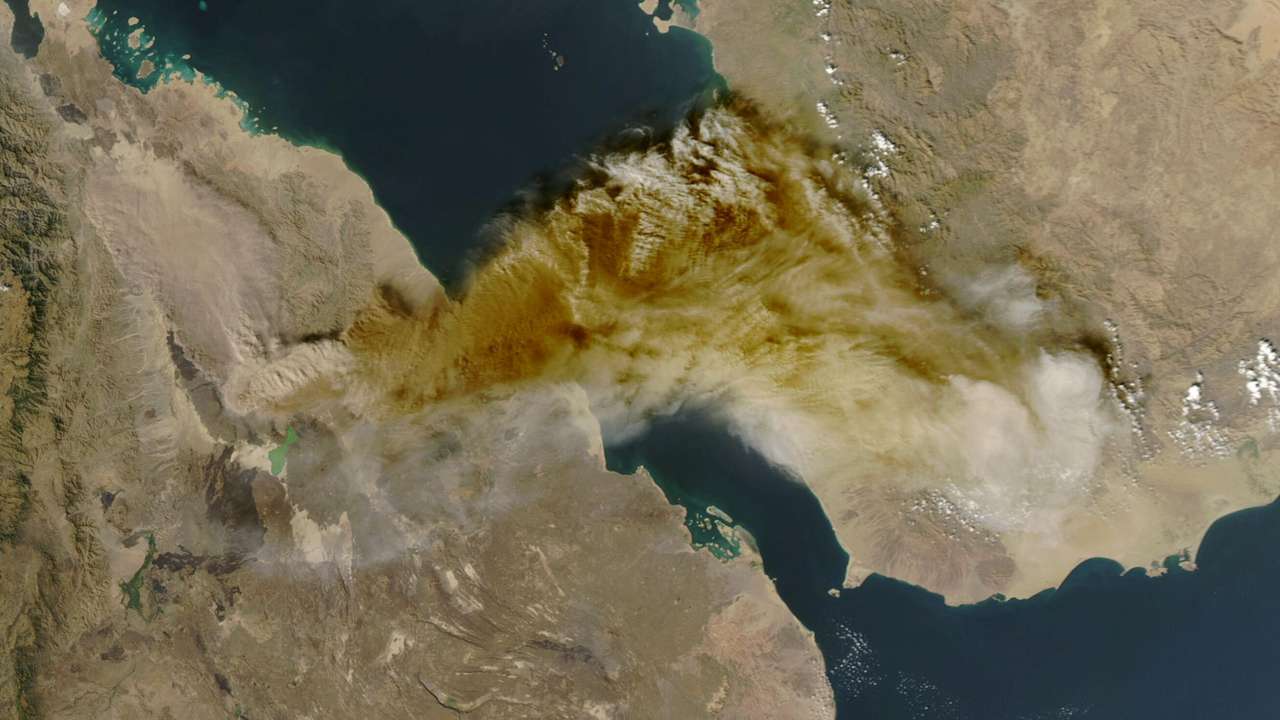
A volcano that had shown no sign of activity for millennia has erupted in northern Ethiopia, spewing ash high into the atmosphere and disrupting life in remote Afar communities.
The Hayli Gubbi volcano, in the Afar region roughly 800 kilometres northeast of Addis Ababa, erupted for several hours early on Sunday, blanketing the nearby settlement of Afdera in thick ash.
Authorities said there were no reports of deaths or injuries, but residents described a dramatic and frightening event, with the ground shaking and a column of smoke rising far above the desert basin.
The Toulouse Volcanic Ash Advisory Centre reported ash clouds reaching an altitude of about 14 kilometres and drifting across the Red Sea. Plumes were later detected moving towards Yemen and Oman, and further towards India and northern Pakistan.
Locals on the ground spoke of panic as the eruption began without warning.
Ahmed Abdela, who lives in Afdera, said the explosion “felt like a sudden bomb had been thrown," leaving families running from their homes.
The region attracts visitors heading to the Danakil desert, known for its salt flats and volcanic landscapes. Travel was brought to a standstill, with stranded tourists unable to move through ash-covered roads.
Officials warned that, although human lives were spared, the consequences for pastoral communities could be severe. Local administrator Mohammed Seid said ashfall had smothered grazing land vital for livestock.
“Our animals now have little to eat,” he said, noting fears that herds may perish if conditions do not improve quickly. Most residents rely almost entirely on livestock for income and food.
The volcano stands roughly 500 metres above sea level within the East African Rift Valley, an area shaped by the slow separation of tectonic plates and frequent seismic activity.
According to the Smithsonian Institution’s Global Volcanism Program, Hayli Gubbi has no recorded eruptions during the Holocene – the geological epoch that began around 12,000 years ago – making Sunday’s event the first known in human history.
This story is written and edited by the Global South World team, you can contact us here.