First-ever self-driving passenger ship sets sail in Japan
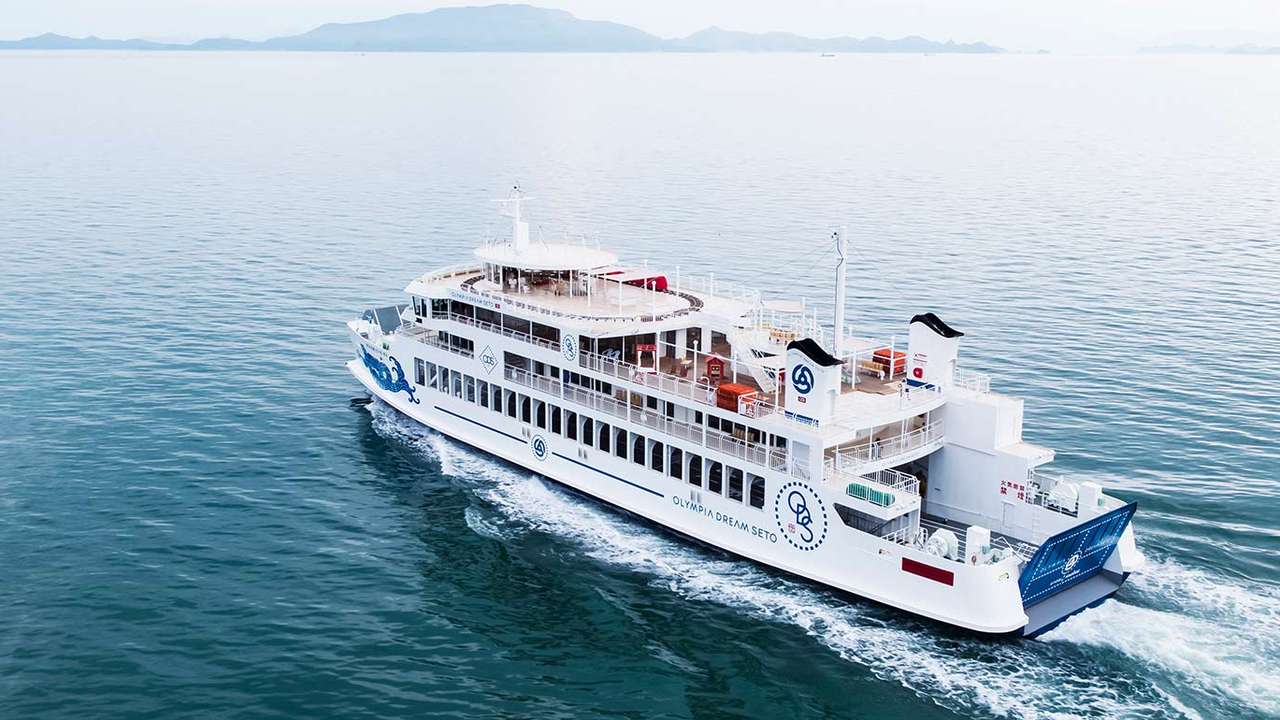
Japan has begun trials of what is set to become the world’s first commercially operated autonomous passenger ferry, with the Olympia Dream Seto launching familiarisation voyages between Okayama and Shodoshima island.
The Nippon Foundation, which is leading the initiative, said it will be the first time anywhere in the world that a regular passenger ship carrying ordinary travellers will operate commercially using automatic navigation technology.
Full-scale operations are planned to begin by the end of 2025.
The project was created to address two growing pressures on Japan’s maritime sector: a shortage of ship crews and the persistent risk of accidents caused by human error. As officials see it, autonomous navigation offers a way to maintain services safely despite declining manpower.
The Olympia Dream Seto is operated by Kokusai Ryobi Ferry Co., based in the western city of Okayama. The route links a port in Okayama Prefecture with Shodoshima, an island in neighbouring Kagawa Prefecture. This is the first ship to receive Japanese government certification as an “autonomous ship.”
At the heart of the system is a network of sensors that continuously recognise surrounding conditions at sea. These allow the ferry to automatically adjust its course, avoid obstacles and control both the rudder and propeller with minimal human input.
A function enabling fully automatic operation under specific conditions has been installed as part of the autonomous ship project. Despite this, operators emphasise safety features, with manual control able to take over immediately in the event of danger or unexpected conditions.
Familiarisation voyages will include both regular passengers and system personnel. These early trips are intended to confirm the vessel’s performance before commercial service begins.
The Nippon Foundation launched the autonomous ship programme in 2020, bringing together domestic shipping, shipbuilding, communications, and trading companies. It aims to develop technologies that could eventually be adopted more widely across the industry.
As part of the same initiative, three additional vessels are scheduled to enter commercial service using autonomous navigation technology by the end of March 2026. These ships will expand Japan’s early foray into self-navigating passenger transport.
Mitsuyuki Unno, the foundation’s executive director, said Japan’s rapid progress gives it a strong position as global standards take shape.
“I think Japan is ahead of the rest of the world,” he said. “We hope to contribute to the creation of international rules as a leader.”
This story is written and edited by the Global South World team, you can contact us here.