Flat-headed cat confirmed alive in Thailand after 29 years
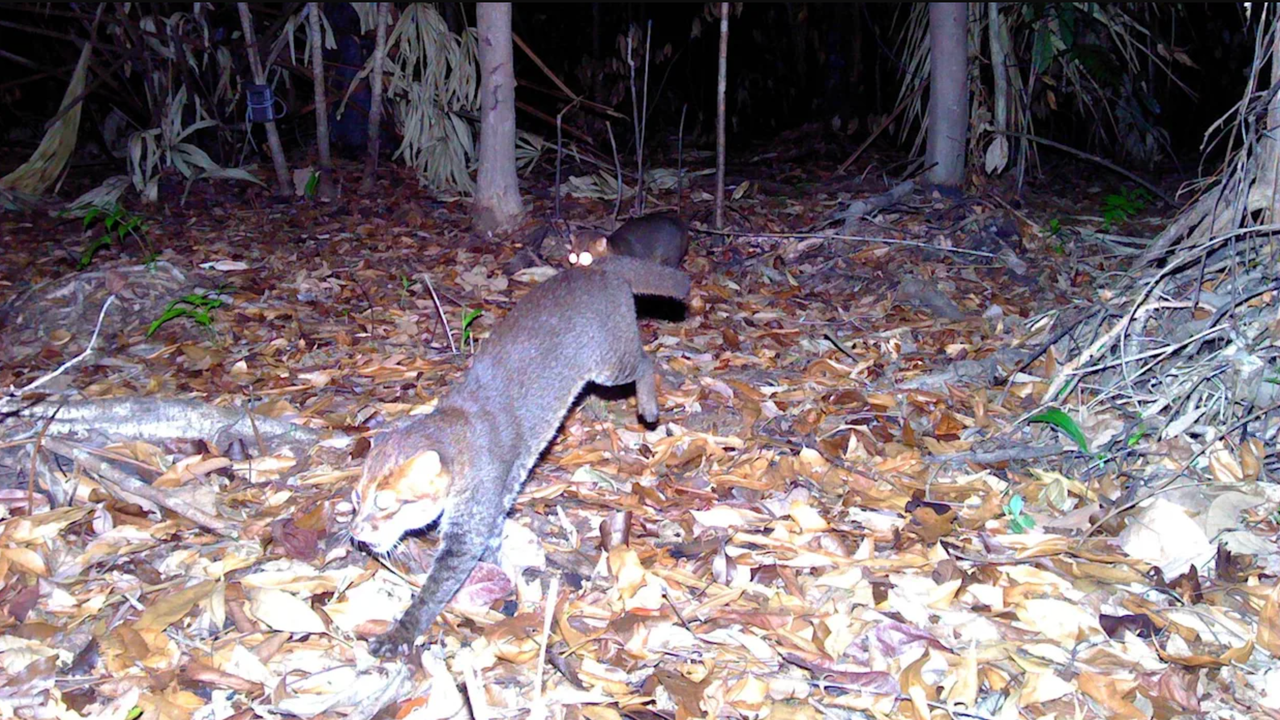
Thailand has confirmed the continued existence of the flat-headed cat, one of the world’s rarest wild felines, after new camera-trap evidence showed the species remains alive in the country nearly three decades after it was last recorded.
The Department of National Parks, Wildlife and Plant Conservation (DNP) and Panthera Thailand announced the finding at a joint press conference on December 26, saying multiple images of the animal were captured during wildlife surveys conducted in 2024 and 2025.
The photographs were taken inside the Princess Sirindhorn Wildlife Sanctuary in southern Thailand, also known as the To Daeng swamp forest. The site has been the focus of a long-running biodiversity survey led by Panthera Thailand in collaboration with government rangers.
Officials said the camera traps recorded several flat-headed cats at different times and locations, including a female accompanied by a kitten, providing clear evidence that the species is breeding in the wild.
DNP director-general Attapol Charoenchansa said the images represent the first confirmed camera-trap records of the flat-headed cat in Thailand in 29 years. According to the department, the animal was documented 13 times in 2024 and 16 times in 2025.
The flat-headed cat, scientifically known as Prionailurus planiceps, is listed as Endangered on the IUCN Red List. It is found only in parts of Southeast Asia and is closely associated with wetlands, rivers and peat swamp forests.
Roughly the size of a domestic cat, the species is highly specialised for a semi-aquatic lifestyle. It has webbed feet, partially non-retractable claws and sharp, backward-pointing teeth that allow it to hunt fish, frogs and other aquatic prey.
The species has suffered sharp population declines across its range due to habitat destruction, wetland drainage and pollution. The IUCN estimates that fewer than 2,500 mature individuals remain globally, and it had previously been considered possibly extinct in Thailand.
Attapol said the rediscovery reflected strengthened protection of peat swamp habitats in the south, where rangers have increased patrols and enforcement to curb illegal encroachment and environmental damage.
Krisana Kaewplang, director of Panthera Thailand, said the finding demonstrated the value of sustained conservation efforts and scientific monitoring, adding that further research and protective measures would now be expanded to secure the species’ future in Thailand.
This story is written and edited by the Global South World team, you can contact us here.