Global South leaders who rose, fell, or clung on in 2025
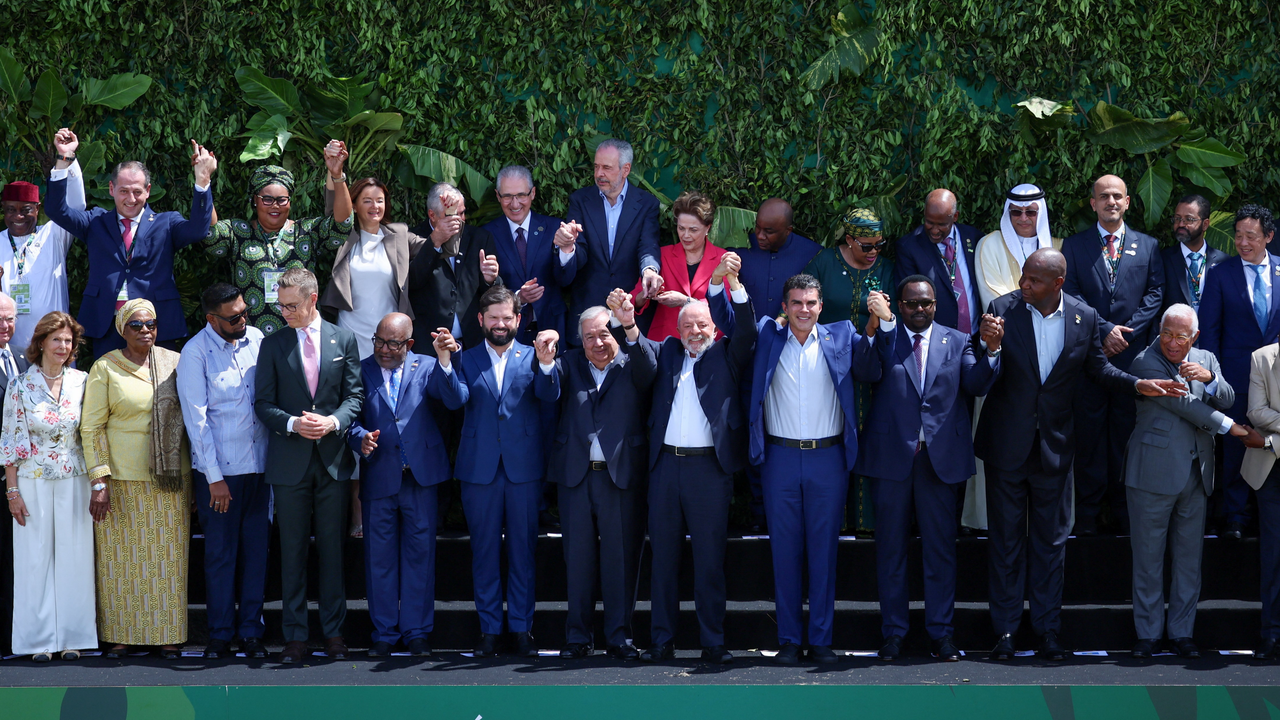
The year 2025 has brought a lot of political changes across the Global South.
From Africa’s power struggles to surprising electoral turns in Latin America and shifts in Asia, leadership across developing regions has been anything but static.
What follows is a region-by-region look at how leadership in the Global South has been reshaped, a narrative of elections, coups, handovers, and diplomatic realignments that together paint a portrait of a world in transition.
Global South leaders in Africa
Africa in 2025 witnessed dramatic power shifts alongside instances of continuity. A wave of military takeovers continued to roil West and Central Africa. In late 2025, Guinea-Bissau experienced a coup on the eve of the election results, soldiers arrested President Umaro Sissoco Embaló just as ballots were being tallied. The junta installed a military leader as head of a “Transitional Republic” the next day.
In Madagascar, President Andry Rajoelina was ousted after elite army units backed mass protests against his rule; he fled abroad as parliament impeached him, and Colonel Michael Randrianirina was sworn in as the new president
Even where leaders weren’t unseated by force, many elections were fraught. In Cameroon, 92-year-old President Paul Biya secured an eighth term, extending his four-decade rule.
Across the continent in Tanzania, the October 2025 general election saw violent crackdowns and an internet blackout as President Samia Suluhu’s ruling party claimed victory.
There were a few bright spots. Malawi’s September 2025 polls led to a peaceful transfer of power. Former President Peter Mutharika defeated incumbent Lazarus Chakwera in a hard-fought race – a democratic change ultimately accepted by all sides
Meanwhile, Africa’s longest-ruling heads of state clung to power through 2025. In Cameroon, Biya’s renewed mandate could see him nearing his 100th birthday in office. Uganda's Yoweri Museveni, in power since 1986 and Equatorial Guinea’s Teodoro Obiang, Africa's longest-serving leader, in power since 1979, managed to remain firmly in control despite facing mounting questions about succession. Museveni is expected to continue his rule when the East African nation goes to the polls on January 15, 2026.
Latin America
In a region weary from economic stagnation and social unrest, voters and power brokers ushered in a new crop of conservative, and sometimes anti-establishment, leaders.
Chile witnessed a sharp ideological turn in its own 2025 presidential race. After a left-wing government under Gabriel Boric struggled to contain crime and economic anxieties, Chilean voters veered in the opposite direction. In December 2025, conservative firebrand José Antonio Kast clinched the presidency in Santiago, defeating a socialist opponent in a runoff and ending the Chilean left’s brief experiment in power
In Central America, too, political currents shifted in 2025. Nasry Asfura, the conservative candidate for Honduran president backed by U.S. President Donald Trump, was declared the winner on Wednesday, December 24, more than three weeks after the November 30 election, which was beset by delays, technical problems and allegations of fraud.
Amid these high-profile changes, other Latin American countries managed more subtle leadership shifts. Ecuador entered 2025 under a youthful new president, 35-year-old Daniel Noboa, who had won a snap election in late 2023. Though inexperienced, Noboa brought a technocratic style after years of bitter left-right polarisation in Quito.
Middle East
In the Middle East, 2025 did not usher in many new faces, but it did witness significant shifts in how those leaders engage with each other and the world.
A prime example is Saudi Arabia, where Crown Prince Mohammed bin Salman continued to wield near-absolute power as the kingdom’s de facto ruler.
Meanwhile in Israel, the return of Prime Minister Benjamin Netanyahu to power at the end of 2022 set the stage for a tumultuous 2023 and beyond. By 2025, the Israeli leader was still in office (already the longest-serving PM in Israel’s history), but his government’s aggressive policies had deepened internal divisions and strained relations with Western allies.
Consider Iran: Supreme Leader Ayatollah Ali Khamenei remained the ultimate authority in Tehran as he has since 1989, and President Ebrahim Raisi, a hardliner aligned with him, stayed in office, focused on weathering U.S. sanctions and domestic unrest.
By 2025, the Middle East’s leadership tableau could be described as a kind of uneasy equilibrium. The old names – Assad, Netanyahu, Erdoğan, Khamenei, MBS (albeit formally still “Crown Prince”) – are still running the show.
Asia
The year began with India cementing a familiar face in power, and ended with Pakistan and Bangladesh facing uncertainty under caretaker regimes after unprecedented political convulsions.
In India, Prime Minister Narendra Modi entered 2025 at the apex of his influence. Fresh off a landslide victory in the spring 2024 general elections.
By the dawn of 2025, Pakistan was finally gearing up for an election under a new Election Commission – one that opposition voices alleged tilted the odds in favour of the establishment-friendly Sharif camp. Regardless of the outcome, Pakistan’s next leader will inherit a nation in economic dire straits and a public cynical about governance.
Sri Lanka, slowly recovering from its financial meltdown and people-power revolt of 2022, continued under President Ranil Wickremesinghe’s stewardship. Wickremesinghe, initially installed by parliament after the Rajapaksa clan’s ouster, managed to secure a measure of stability by pushing through painful economic reforms to satisfy the IMF.
By 2025, Sri Lanka’s protests had quieted, but the public remained wary and weary, wondering if Wickremesinghe would call an election to legitimise his mandate or cling to the remainder of the term he inherited.
Malaysia spent 2025 under Anwar Ibrahim’s premiership, heading a rare multi-ethnic coalition that took power in late 2022. Anwar’s government, though unwieldy, survived constant opposition sniping and even won some key state elections, hinting that the era of volatile hung parliaments might stabilise.
This story is written and edited by the Global South World team, you can contact us here.