Guinea's democracy hangs in the balance as junta leader runs virtually unopposed
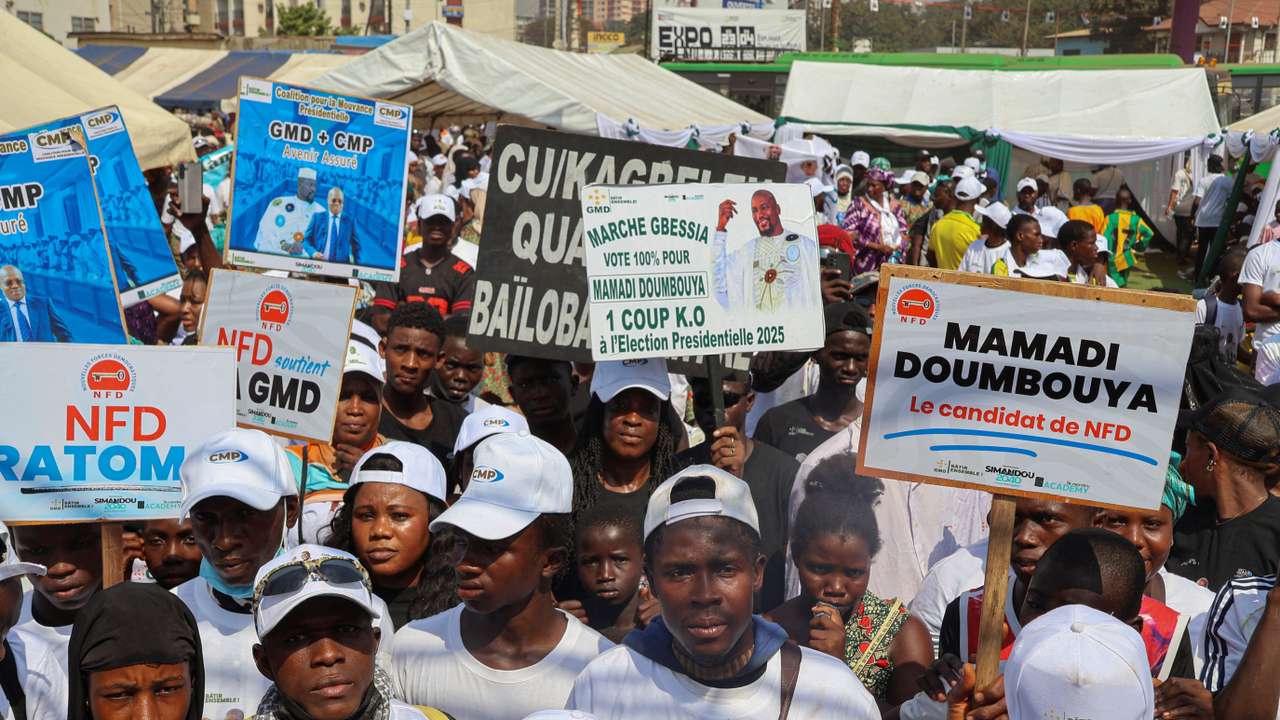
Guinea is holding a presidential election on December 28, 2025, the first since a military coup in September 2021 that overthrew then-President Alpha Condé.
The vote is widely seen as a pivotal moment in Guinea’s troubled democratic history, but observers say it’s unlikely to be competitive under current conditions.
General Mamady Doumbouya, the current head of state who led the coup, is virtually certain to win after key opposition leaders were disqualified or forced into exile, leaving him without serious challengers.
Why this election matters
- It is portrayed by the government as a transition back to constitutional civilian rule after four years under military leadership.
- Critics and rights groups say the process lacks true competition and that restrictions on protests, media, and political activity have tilted the playing field.
- The election follows a September 2025 constitutional referendum that extended presidential terms to seven years, allowed military leaders to run, and expanded executive powers, a change approved amid opposition boycott and controversy.
About 6.7 million Guinea-Bissau citizens are eligible to vote, and results are expected within 48 hours of the polls closing. A runoff would be held if no candidate wins an absolute majority.
Who’s running?
1. General Mamady Doumbouya (Front-runner)
Doumbouya, a 41-year-old former special forces commander, seized power in 2021 and has governed through a military-led transitional government. He initially pledged not to run for president but reversed that stance after the new constitution removed restrictions on junta members.
Supporters credit him with infrastructure gains, reforms in the mining sector, and economic initiatives. Critics counter that his administration has cracked down on civil liberties, banned protests, restricted media, and jailed or intimidated opponents.
Other candidates
While nine candidates are on the ballot, most are considered relatively minor figures with limited national support:
- Abdoulaye Yero Baldé – Former education minister and economist; seen by some as a notable opposition voice.
- Faya Lansana Millimono – Head of the Liberal Bloc; early supporter of the coup who later broke with Doumbouya.
- Ibrahima Abe Sylla – Ex-energy minister appealing to youth voters.
- Hadja Makale Camara – The only female candidate, former foreign minister.
- Abdoulaye Kourouma, Mohamed Nabe, Bouna Keita, and independent Mohamed Cherif Tounkara, additional challengers with limited reach.
However, none of these challengers have a substantial grassroots base or the resources to mount a serious challenge against Doumbouya, and several prominent opposition figures were barred from standing.
Who was excluded
Several leading opposition leaders were prevented from running:
- Cellou Dalein Diallo – Former prime minister and veteran opposition leader, now living in exile after facing legal charges and residency barriers.
- Alpha Condé – Guinea’s president before being ousted in the 2021 coup; now believed to be abroad, and his party is suspended.
- Sidya Touré – Another former prime minister and opposition figure, also excluded due to residency rules.
Many rights advocates view these exclusions as part of a broader narrowing of the political space, raising concerns about democratic legitimacy.
Key issues in the election
The main question for observers is not who will win — that appears to be Doumbouya — but whether the election will be considered free, fair, and inclusive. Many civil society groups and international actors have criticised restrictions on protests, media freedom, and opposition mobilisation.
The UN has raised concerns about intimidation and a climate of fear during the campaign, urging Guinea’s authorities to protect civic freedoms and ensure a credible vote.
Guinea is one of the richest countries in the world in mineral resources, especially bauxite, iron ore (including the massive Simandou deposits), gold, and diamonds, yet it remains among the poorest in living standards.
As Guinea goes to the polls on December 28, 2025, Doumbouya’s path to the presidency appears clear. But the broader implications, for democracy, civil liberties, and how Guinea’s resources are governed, will continue to shape both internal politics and regional stability in West Africa in the years ahead.
This story is written and edited by the Global South World team, you can contact us here.