Guinea's Doumbouya looks to complete journey from coup leader to president
By Portia Crowe
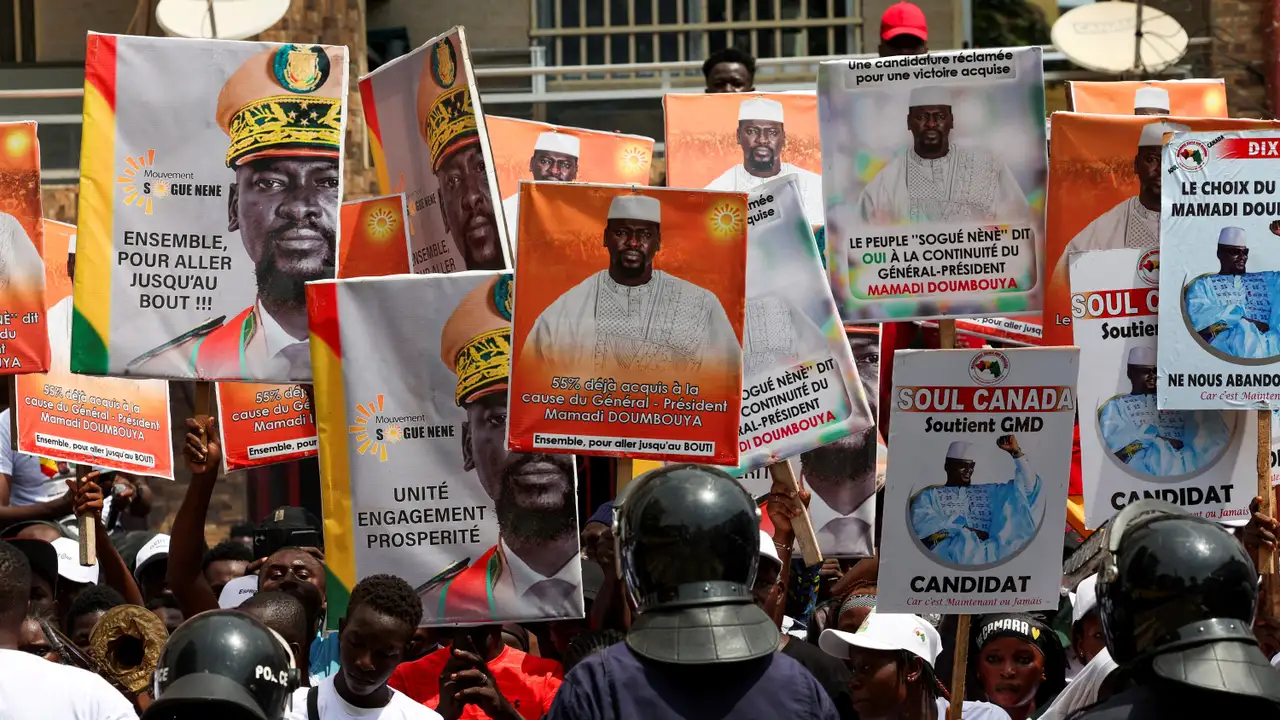
Since seizing power in a coup four years ago, Mamady Doumbouya has overhauled Guinea's minerals sector and launched a huge iron ore project, achievements he hopes will secure him victory in a presidential election meant to cap a return to civilian rule.
The December 28 vote, which Doumbouya once pledged not to contest, is expected to cement his grip on power in the West African country after key challengers were sidelined.
A former special forces commander believed to be in his early 40s, Doumbouya gained broad support after he led the September 2021 coup against then-president Alpha Conde, who had sparked protests by seeking a controversial third term.
Unlike neighbouring Sahel states plagued by coups and jihadist insurgencies, Guinea has enjoyed relative stability under his leadership, alongside economic reforms and new mining sector investments, according to consultancy Signal Risk.
BAUXITE AND IRON ORE
The country holds the world's largest bauxite reserves and richest untapped iron ore deposit at Simandou, where a massive mining project was launched in November.
Under Doumbouya, Guinea has mirrored the efforts of its military-led neighbours Niger, Burkina Faso and Mali to exert more control over mining in order to boost state revenues. His transitional government revoked EGA subsidiary Guinea Alumina Corporation's license in July after a refinery dispute, transferring its assets to a state-owned firm.
Western powers face a dilemma: denouncing democratic backsliding could push Doumbouya closer to China and other rivals, said Benedict Manzin, lead Middle East and Africa analyst at risk consultancy Sibylline.
But a successful transition from coup leader to civilian president could embolden other militaries in the region, he said.
"Doumbouya ... seized power, largely ignored (West African bloc) ECOWAS and domestic demands to rapidly transition back to civilian rule... (then) secured his own election... while the international community largely overlooked how he got to power in the first place," Manzin said.
"A near Cinderella story for an aspiring military despot."
PATH TO POWER
An ethnic Malinke from Kankan in Guinea's east, Doumbouya trained in Israel, Senegal, Gabon and France, where he served in the French Foreign Legion and met his wife, French gendarme Lauriane Doumbouya. He had 15 years of military experience when he took power, including missions in Afghanistan, Ivory Coast, Djibouti and Central African Republic.
The decision to run in the election marks a reversal. The original post-coup charter barred junta members from running but a constitution dropping those restrictions was passed in a September referendum.
Doumbouya has campaigned on his infrastructure achievements and pledged to fight against poverty and corruption.
"The mere fact that the transitional president is a candidate...clearly demonstrates that the objective is to retain power," said Gilles Yabi, founder of West African think tank WATHI. "Nothing will prevent General Doumbouya and the military around him from holding on to power," he said.
In 2022, his government proposed a two-year transition to elections, but missed that deadline. Doumbouya has since taken steps to shore up support, Manzin said.
Civil society critics accuse his government of banning protests, curbing press freedom and restricting opposition activity.
He has also pardoned former coup leader Moussa Dadis Camara, who was convicted over a 2009 stadium massacre and retains support in the populous Guinee Forestiere region. Under Doumbouya, the Supreme Court faced pressure to bar opposition candidates, Manzin said.
Guinea's most prominent opposition figure, Cellou Dalein Diallo, lives in exile after facing a corruption case. Ex-President Conde is also in exile and, at 87, was disqualified under a new age limit of 85.
This article was produced by Reuters news agency. It has not been edited by Global South World.