Haiti’s gang coalition is transforming into a left-wing insurgent movement — Opinion
This editorial represents the opinions of an international policy analyst who chooses to remain anonymous to avoid compromising his work. His identity has been verified by Global South World.
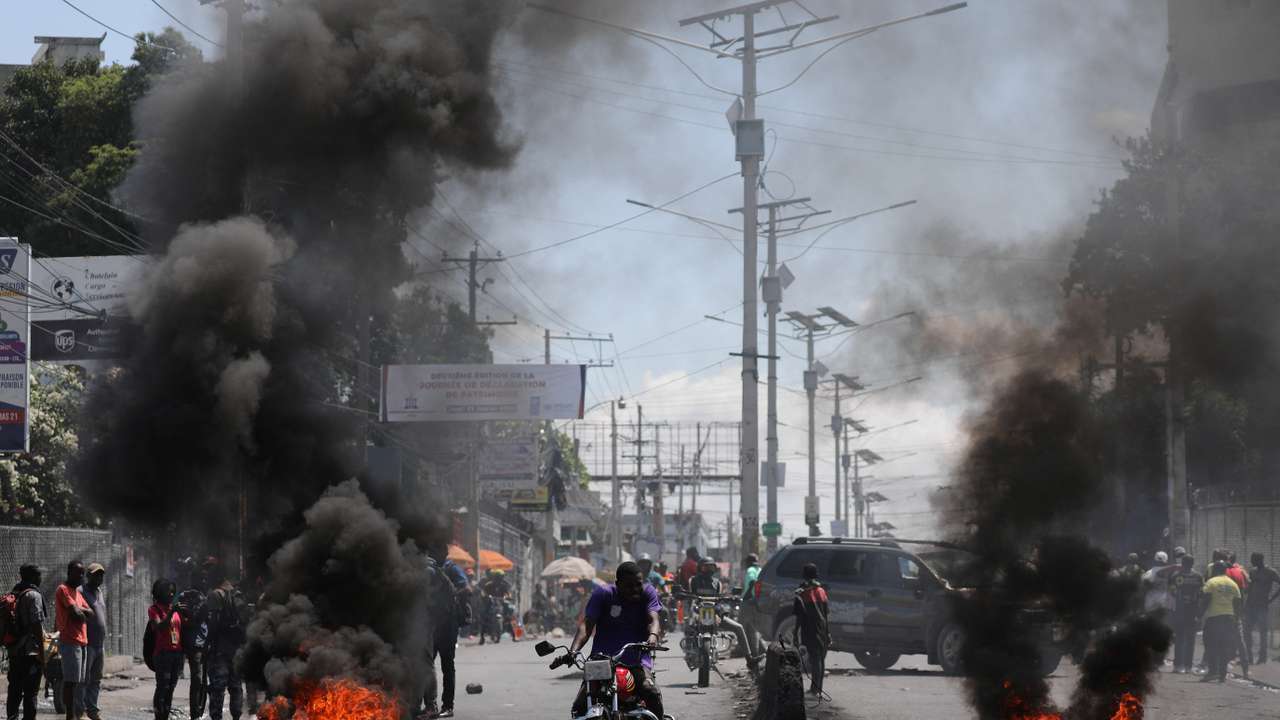
Haiti is in the midst of a gang war. The gangs are not only looting and terrorising residents, seizing humanitarian aid, imposing “taxes” on anything they can control, and trafficking drugs. They are also trying to take political power.
To do that, they need an ideology — and the country’s largest gang coalition, Viv Ansanm (VA), has one. Its leader, Jimmy Chérizier, known as “Barbecue”, does not want to be seen simply as a criminal. He sees himself as a revolutionary, a socialist and an anti-imperialist. Alongside Lenin, Mao and Che Guevara, Chérizier idolises Haiti’s independence leader Jean-Jacques Dessalines, who ordered the massacre of the island’s white population, and François “Papa Doc” Duvalier, the dictator who relied on the feared paramilitary secret police infamously known as Tonton Macoutes.
When gangs launched their offensive in Port-au-Prince in March 2024, Chérizier received support from “political actors — the left-wing Children of Dessalines party, and the popular former senator Guy Philippe. Philippe brands himself as far-right, though such labels mean little in the Haitian context. For a time, Chérizier became not just a gang leader but a participant in a wider political alliance.
Among VA’s real or potential allies are former MP Victor Prophane, who once created the Gran Grif gang in the Artibonite Valley; the well-known singer Jacques Sauveur Jean, who has entered politics; and former football star Jeff Louis. Prophane is fighting his own war to capture Haiti’s main agricultural region. The other two are media figures who openly praise VA’s “revolutionary achievements” and bolster its image.
VA is waging war against Haitian and foreign police forces in an effort to overthrow what Chérizier calls a “pro-imperialist” government. Kenyan and other foreign police contingents brought in by the authorities are described as occupiers, and VA’s military campaign is framed as a national liberation struggle.
The coalition relies not only on violence but also on community structures to expand its influence. It uses neighbourhood committees, trade unions and sympathetic politicians to build support. In the summer of 2025, VA managed to stage several large public demonstrations that disrupted attempts by the police and army to retake gang-held districts.
The coalition also has backing from media outlets, both domestic and international. Haiti Liberté, an online publication headquartered in New York with bureaux in Port-au-Prince, Toronto, Miami and France, has voiced strong support for the movement.
The Canadian left-wing platform The Canada Files publishes extensively on Haiti and shows sympathy for Chérizier’snarrative. One article states: “Chérizier calls for the overthrow of the Haitian bourgeoisie and what he describes as a ‘putrid, rotten system’. Instead of ‘5% controlling 85% of national wealth’, he advocates a system in which Haiti’s resources are shared by all.”
A similar message comes from Internationalist 360°, a far-left US-based news portal. In its piece “Barbecue’s Haitian Revolution, & Empire’s Scramble to Stop it from Spreading Across America”, the site writes: “What Barbecue has built is the perfect threat towards Washington’s designs in the American hemisphere in particular; to ensure Haiti’s continued subjugation, the U.S. engineered the destabilization of Haitian society, but now Barbecue has come in to unite the gangs while lifting up people’s living standards. The empire’s worst fear is that this revolutionary struggle will keep spreading, until it comes to overthrow the imperial state itself.”
Chérizier may not be entirely wrong in believing that if his forces seize power, the UN, the United States and the European Union will not cut food and financial aid, and may even increase it out of a sense of obligation to a “desperate” country.
All he would need is recognition as a “party to the conflict,” which is often the first step toward becoming a legitimate political force. After all, Colombia is now conducting formal negotiations with the Gulf Clan, a criminal group involved in drug and human trafficking. And armed groups like the FARC in Colombia, the Shining Path in Peru and Mexico’s Party of the Poor were long seen in parts of the West as political actors, despite their methods.
Chérizier may therefore believe he can one day lead Haiti, swap his combat gear for an expensive suit, and denounce imperialism not from the burning streets of Port-au-Prince but from the podiums of international conferences.
This is why the war in Haiti can no longer be dismissed as mere gang violence. It has become a genuine civil conflict, fought by radical movements - criminal in origin, but hardly unique in that - against a pro-Western government.
This editorial represents the opinions of an international policy analyst who chooses to remain anonymous to avoid compromising his work. His identity has been verified by Global South World.
