How advanced are Japan’s tsunami warnings?
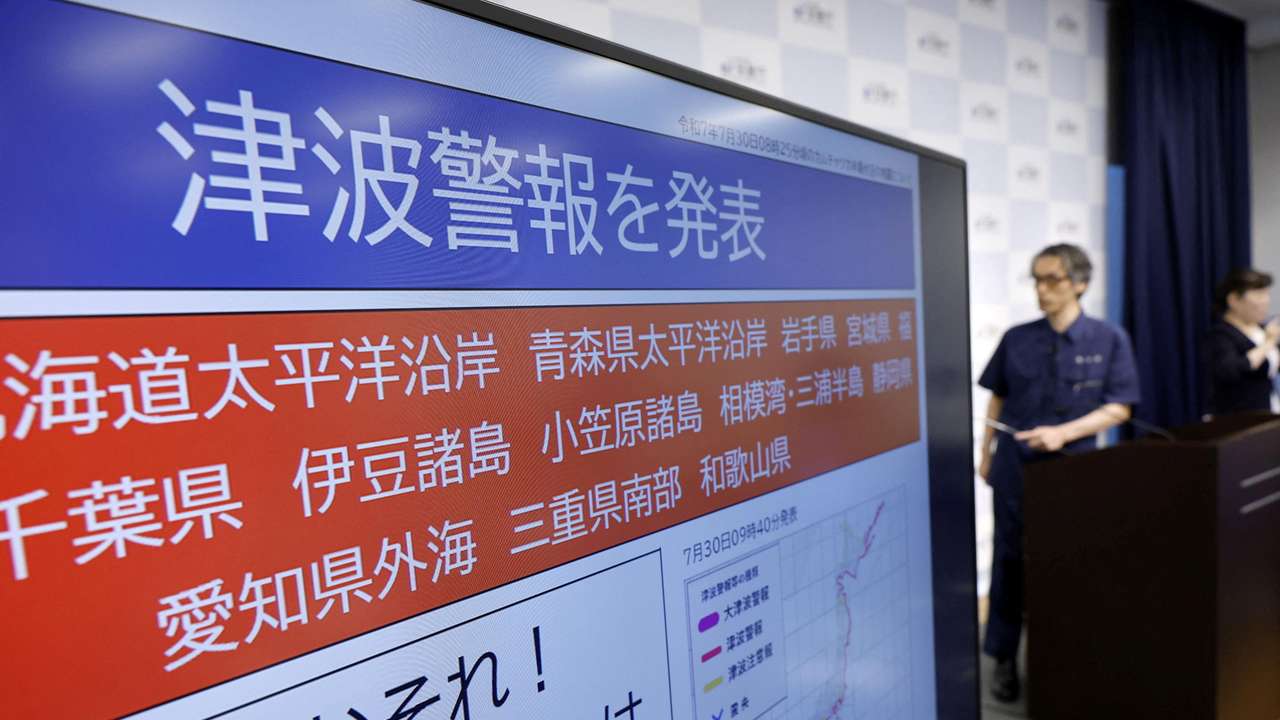
A strong offshore earthquake on December 8 put Japan’s tsunami warning system to the test, after the Japan Meteorological Agency issued an alert for the northern prefecture of Aomori.
The magnitude-7.6 quake struck off Misawa at 14:15 GMT, according to the US Geological Survey. Two tsunami waves of about 40 centimetres were recorded, and local media reported several injuries.
The quick alert drew attention to how far Japan’s early-warning technology has advanced since the 2011 disaster, when delays and inaccurate readings left coastal towns with little time to escape. That quake and tsunami killed nearly 20,000 people and caused a triple meltdown at the Fukushima Daiichi nuclear plant.
In response, Japan spent more than a decade building the world’s largest seabed earthquake-monitoring system.
The first network, S-net, extends across the Japan Trench and uses more than 3,500 miles of cable to link 150 ocean-floor observatories.
S-net can detect offshore shaking before it reaches land. In a 2018 quake, its sensors issued alerts 20 seconds faster than land-based instruments, allowing trains to slow and emergency warnings to be broadcast.
A second system, DONET, was built along the Nankai Trough, one of Japan’s most dangerous seismic zones. It was expanded in 2013 and later joined by N-net, completed in June 2025.
Together, the networks give Japan real-time coverage of its two major subduction zones. Authorities say the system can extend tsunami warning times by up to 20 minutes and provide more accurate readings of offshore quakes.
Scientists also benefit from continuous data on how faults move under the seabed, including slow-slip events that sometimes precede major earthquakes.
Local governments are improving evacuation plans, too. In September, the central government designated 108 coastal municipalities for enhanced tsunami-mitigation work, including new evacuation routes and warning facilities.
Sendai, one of the designated cities, has deployed automated drones that broadcast evacuation orders and relay images to disaster officials when normal communications fail.
It is indisputable that Japan, one of the world’s most disaster-prone nations, now has the world’s most advanced tsunami warning system. And the rapid alerts on December 8 showed how much more time authorities can now provide when offshore quakes strike.
This story is written and edited by the Global South World team, you can contact us here.