Hungary's Orban government moves to stem fallout from juvenile centre abuse case
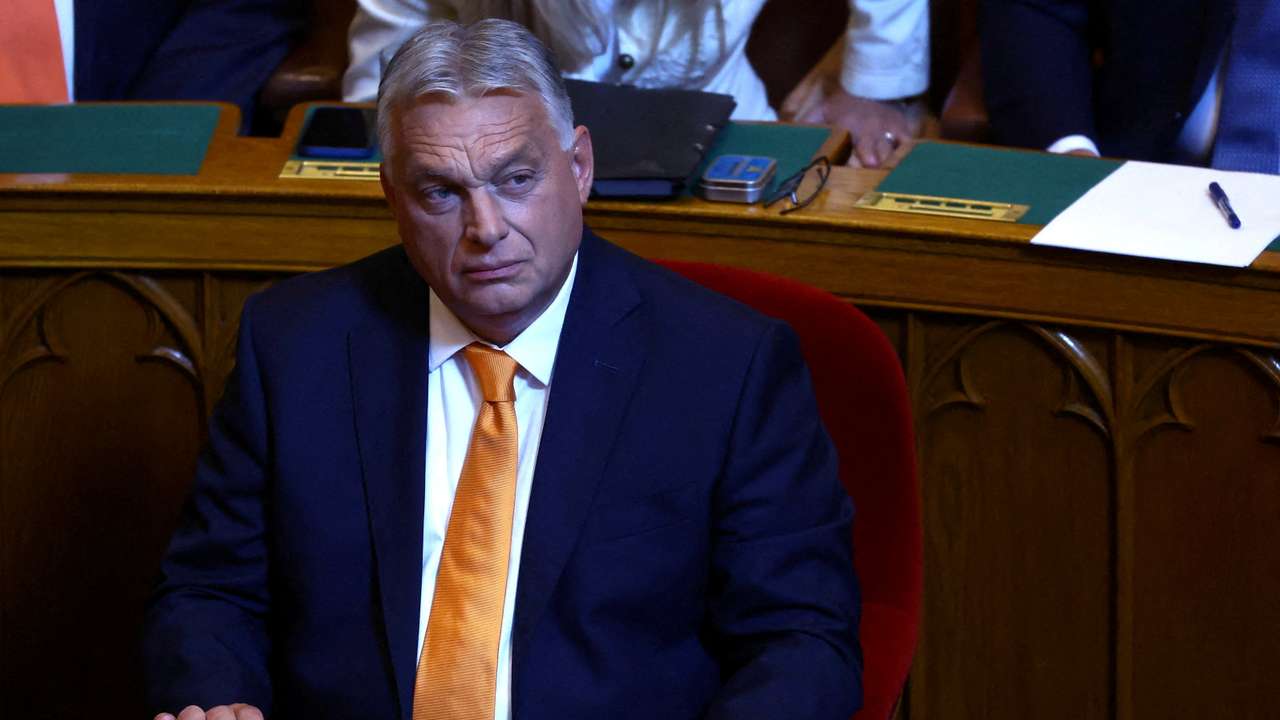
By Krisztina Than
Hungary's government has put state-run juvenile detention centres under direct police oversight, Prime Minister Viktor Orban's chief of staff said on Wednesday, trying to stem the political fallout from an abuse scandal at one such facility.
Opposition leader Peter Magyar, whose Tisza party is leading opinion polls ahead of an election likely in April, on Tuesday urged Orban to resign and called for early elections after an opposition activist published a video showing physical abuse at a juvenile centre in Budapest, which dated back several years.
Reuters verified that the security footage was filmed at the juvenile detention centre, but the date when the videos were filmed could not be verified.
"The government decided at its meeting yesterday that the current management (of these institutions) within the social care system is not sufficient, as it failed to prevent these crimes," chief of staff Gergely Gulyas told a briefing.
He said Hungary's five juvenile correctional institutions would be placed under direct police oversight with immediate effect and that prosecutors were investigating the case.
In a statement on Wednesday, the prosecutor's office said that a total of seven people had been detained at the state-run Budapest juvenile centre so far. None had been charged.
The Social and Child Protection Directorate, which had overseen the Budapest centre, and belongs under the oversight of the Interior Ministry, did not immediately respond to a request for comment.
SOME ABUSE DETAILS EMERGE FROM PROSECUTORS
The prosecutors said two men employed as custodial officers had physically abused young people at the centre, hitting their heads with a window handle.
"A third suspect, who has been working in the educational field for almost 15 years, also took part in the abuse and also helped the former director, who is under arrest, as an accomplice in the fictitious employment of victims of human trafficking," the prosecutors said in a statement.
Because the case is in the investigation phase, the prosecutors haven't issued any charges and didn't disclose the identities of the suspects. Reuters was unable to independently establish their identities.
Prosecutors said they have been investigating the former director of the centre for months, on suspicion of running a prostitution ring, money laundering and human trafficking.
The video published by the opposition activist and former lawmaker Peter Juhasz this week led to the resignation of the centre’s acting director.
Opposition leader Magyar on Wednesday called for a demonstration for Saturday to march to Orban's office in the Budapest castle district in protest.
Magyar launched his Tisza party last year after a scandal that led to the resignation of President Katalin Novak, an Orban ally, when it emerged she had granted a pardon in a child sex abuse case. The episode marked a rare and major political setback for Orban, who has been in power since 2010.
This article was produced by Reuters news agency. It has not been edited by Global South World.