In China, a global push to detect mysterious ‘ghost particles’
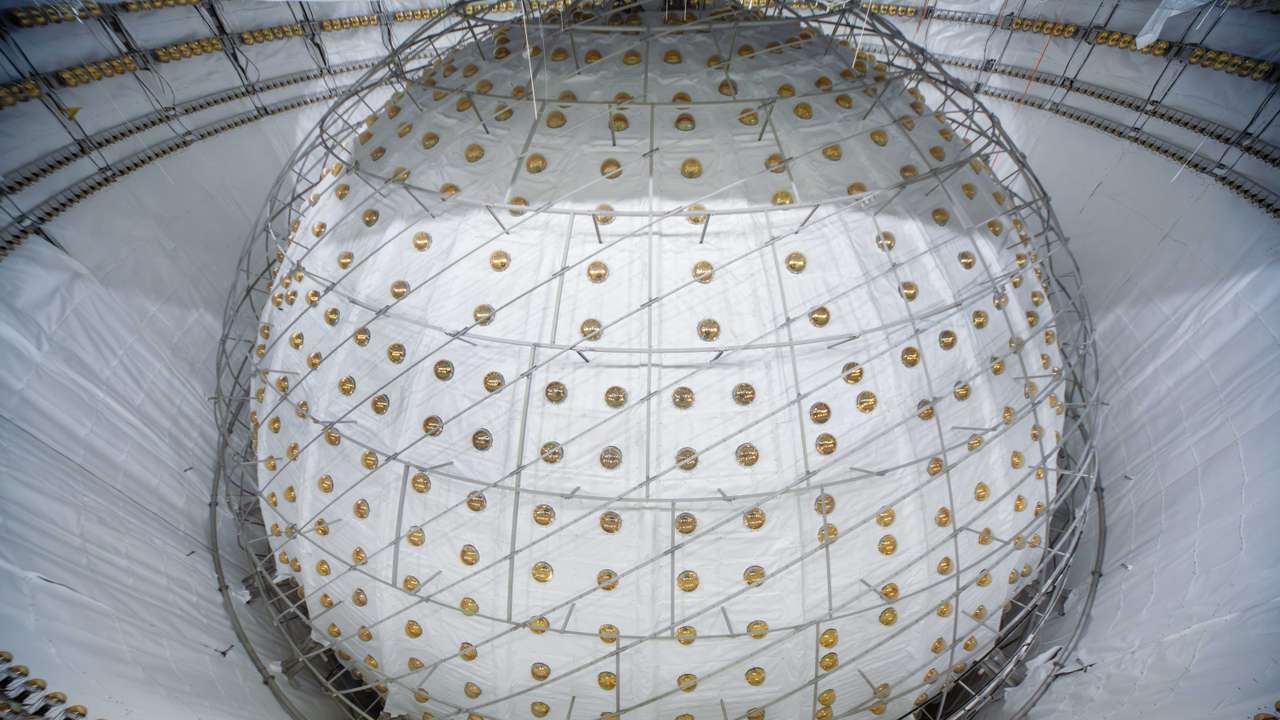
China’s new underground neutrino observatory has delivered the most precise measurements yet of mysterious subatomic particles known as neutrinos, researchers announced this week.
The achievement came just 86 days after the detector, called the Jiangmen Underground Neutrino Observatory (JUNO), began operating — a pace previously unknown for a project of this scale and gravity.
Neutrinos, sometimes nicknamed “ghost particles,” are among the most puzzling components of the universe. They pass straight through planets, buildings and even our bodies without leaving a trace, and trillions of them stream through humans every second.
Because they barely interact with anything, scientists struggle to study them. However, understanding how they behave could help explain how the universe is structured and where its matter comes from.
The new data suggests JUNO is working exactly as planned and is already measuring neutrino behavior with more accuracy than all previous experiments combined, according to scientists at the University of Mainz in Germany, who collaborate on the project.
The results put researchers closer to answering a major outstanding question in physics: the order of neutrino masses, which determines how these particles transform from one type into another as they travel.
The observatory itself is enormous: a 20,000-ton spherical detector buried deep under a mountain in southern China. It took ten years to build and cost more than $350 million. It was designed specifically to track the subtle changes neutrinos undergo as they move, which earlier experiments could not measure clearly.
Although located in China, JUNO is a global effort involving more than 700 researchers from 17 countries, including the United States, Germany, Italy, France and Russia.
“Achieving such precision within only two months of operation shows that JUNO is performing exactly as designed,” project leader Yifang Wang said.
He said the detector is now positioned to answer questions that have puzzled scientists for decades and to search for entirely new physics beyond current theories.
This story is written and edited by the Global South World team, you can contact us here.