Is Guinea’s army returning to the barracks or redefining power?
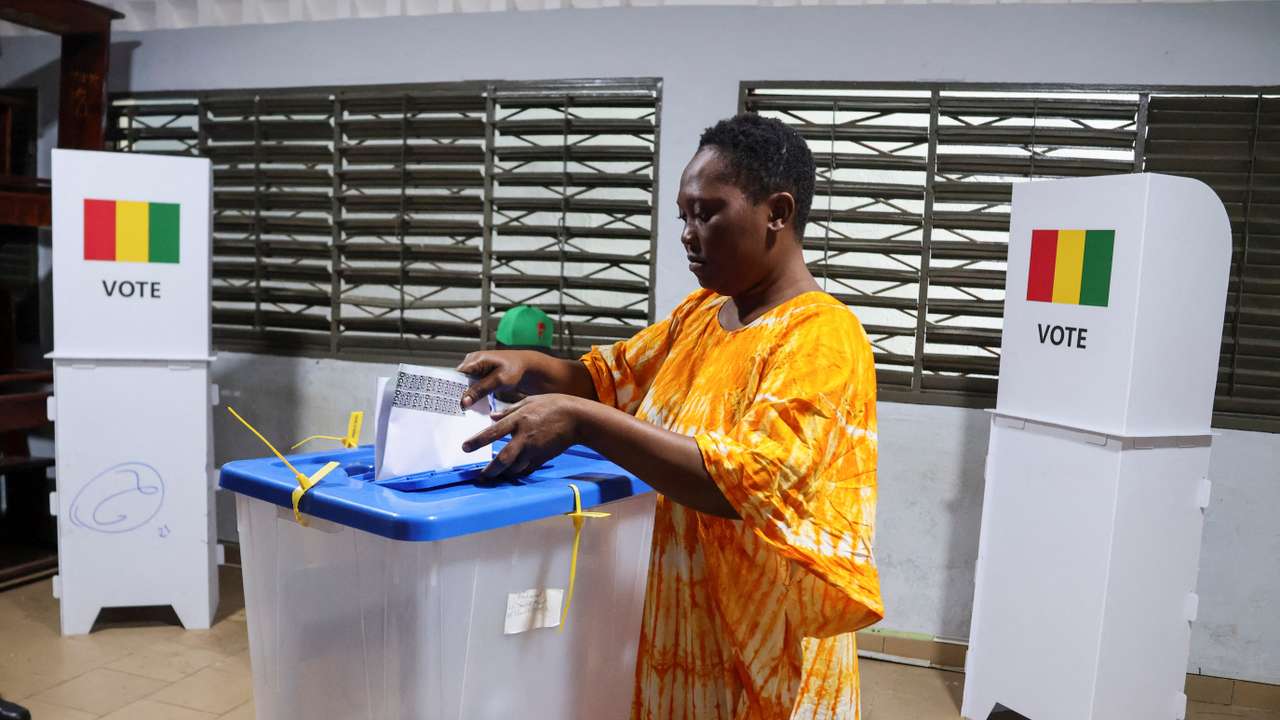
As Guineans prepare to vote in the December 28 presidential election, a central question looms larger than individual candidates or campaign promises: what role should the military play in Guinea’s political life?
Four years after soldiers seized power in a coup, the election is widely seen as a test not only of civilian rule, but of whether the armed forces are stepping back from politics or entrenching themselves within it.
The Guinean military has long been a decisive political actor. Since independence from France in 1958, the country has experienced repeated coups, long periods of authoritarian rule, and fragile civilian governments vulnerable to military intervention. Analysts note that the armed forces have historically positioned themselves as both guardians of national stability and arbiters of political power.
That dynamic resurfaced in September 2021, when elite troops led by then–Special Forces commander Mamady Doumbouya overthrew President Alpha Condé, citing corruption, economic mismanagement and political violence linked to Condé’s third-term bid. The takeover was welcomed by many Guineans weary of unrest, but it once again placed the military at the centre of governance.
A transition led by soldiers
Following the coup, the country was governed by a military-led transitional authority dominated by officers. While civilian technocrats were later brought into government, the key levers of power, security, territorial administration and political oversight, remained under military influence.
Regional bloc ECOWAS pressed the junta to set a clear timetable for elections and a return to civilian rule. Doumbouya initially promised a rapid transition, then an 18-month timeline, missing multiple deadlines before eventually committing to elections in late 2025. Throughout this period, the military retained a dominant role in shaping the transition process.
The Constitution and the uniform
The September 2025 constitutional referendum marked a decisive shift. The new basic law removed restrictions preventing military leaders from contesting elections, extended presidential terms from five to seven years, and strengthened executive authority through the creation of a senate partly appointed by the president.
Legal scholars and rights groups argue that these changes blurred the line between a temporary military transition and permanent political influence. By enabling a serving general to seek the presidency, the constitution effectively normalised the military’s direct entry into electoral politics.
Supporters counter that the referendum provided a legal framework for ending transitional rule and that submitting to elections represents a step away from governing by force.
From barracks to ballot box
No longer presenting himself as a neutral arbiter overseeing a handover, Doumbouya is now a political actor seeking a popular mandate. His campaign has leaned on the state apparatus, with ministers and senior officials touring the country, while public demonstrations by critics have remained banned.
Opposition figures and civil society groups argue that the military has not withdrawn from politics but merely changed its methods, replacing decrees and uniforms with constitutional tools and electoral processes designed to preserve its influence.
Whether Guinea’s military is truly returning to the barracks may not be decided on election day alone. Much will depend on post-election governance: the independence of institutions, the space allowed for opposition, and the military’s willingness to submit to civilian oversight.
If the armed forces retain an outsized role behind the scenes, the election may mark not the end of military involvement in politics, but its transformation into a more institutionalised form.
This story is written and edited by the Global South World team, you can contact us here.