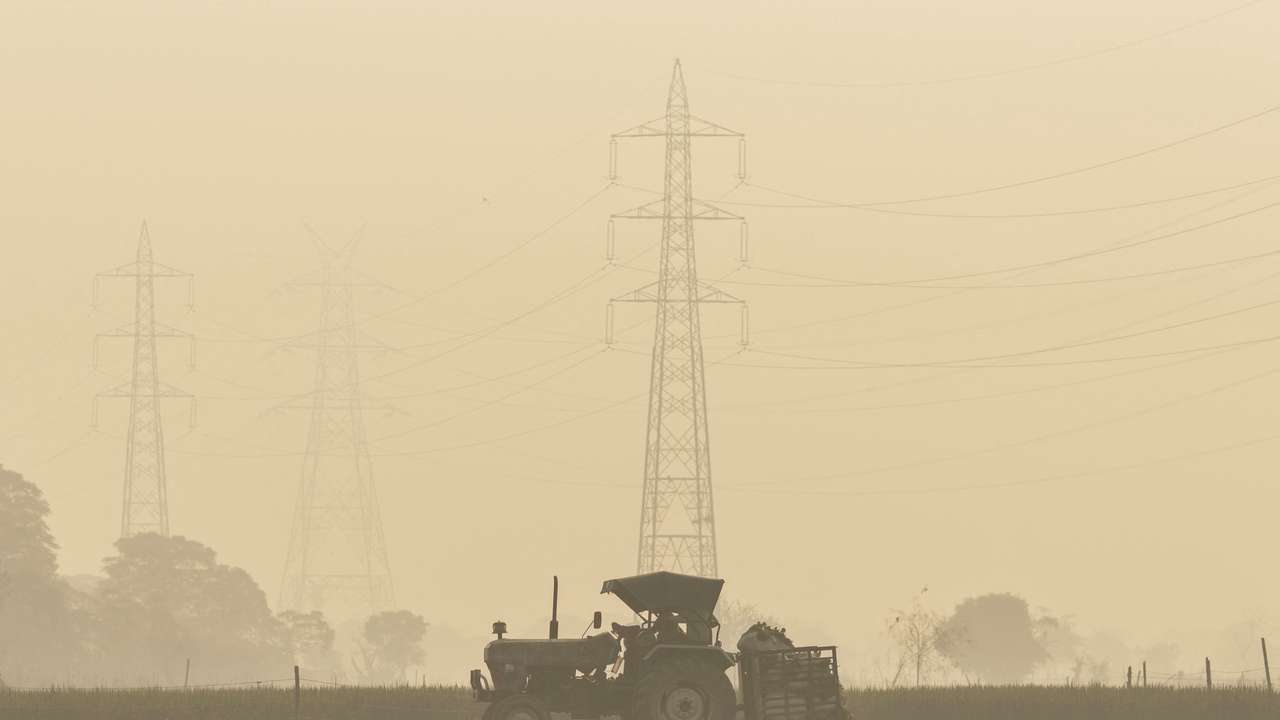
Allegations of tampering with air-quality data have raised questions about whether the government is presenting an artificially cleaner image of the capital’s toxic air.
Officials in Delhi have been accused of spraying water directly around air-quality monitoring stations to suppress pollution readings and even switching off equipment during peak pollution hours. This includes the Diwali festival in October, when firecracker smoke pushes air readings to hazardous levels.
India’s Air Quality Index (AQI) labels readings between 400 and 500 as “severe,” the worst category, while “good” air falls between 0 and 50. Environmental groups argue that lowering reported levels encourages complacency and hides policy failures.
Reports from Singaporean paper Straits Times said they witnessed a sprinkler truck repeatedly circling a monitoring station on a college campus in Jahangirpuri on November 21, directing jets of water around and towards the equipment.
Staff operating the vehicle said they had worked at the site for more than a month, spraying nearly 28,000 litres of water daily. Analysts say this can wash particles from the air, increase humidity and cause pollutants to fall faster, thereby lowering recorded readings.
On Diwali night, The Times of India reported that over half of the city’s monitoring stations were switched off as pollution surged, with only 12 of 39 stations operating by 3 a.m. Much of the missing data—163 monitoring hours in total—covered the most polluted period and was reinstated only after levels dropped later in the morning.
Delhi officials deny data manipulation, calling the accusations politically motivated, but the issue has reached India’s Supreme Court.
On November 17, judges ordered the city government to submit an affidavit explaining the performance of its monitoring system. The government has since claimed that the first half of November was the cleanest in three years, reporting an average AQI of 348.
Public anger is growing, with at least three protests held this month.
At one demonstration, a hand-held device measured an AQI of 377—worse than official figures—and protesters demanded truthful data to guide public health decisions.