Japan’s catchphrase of the year goes to Takaichi’s marathon pledge to ‘work’
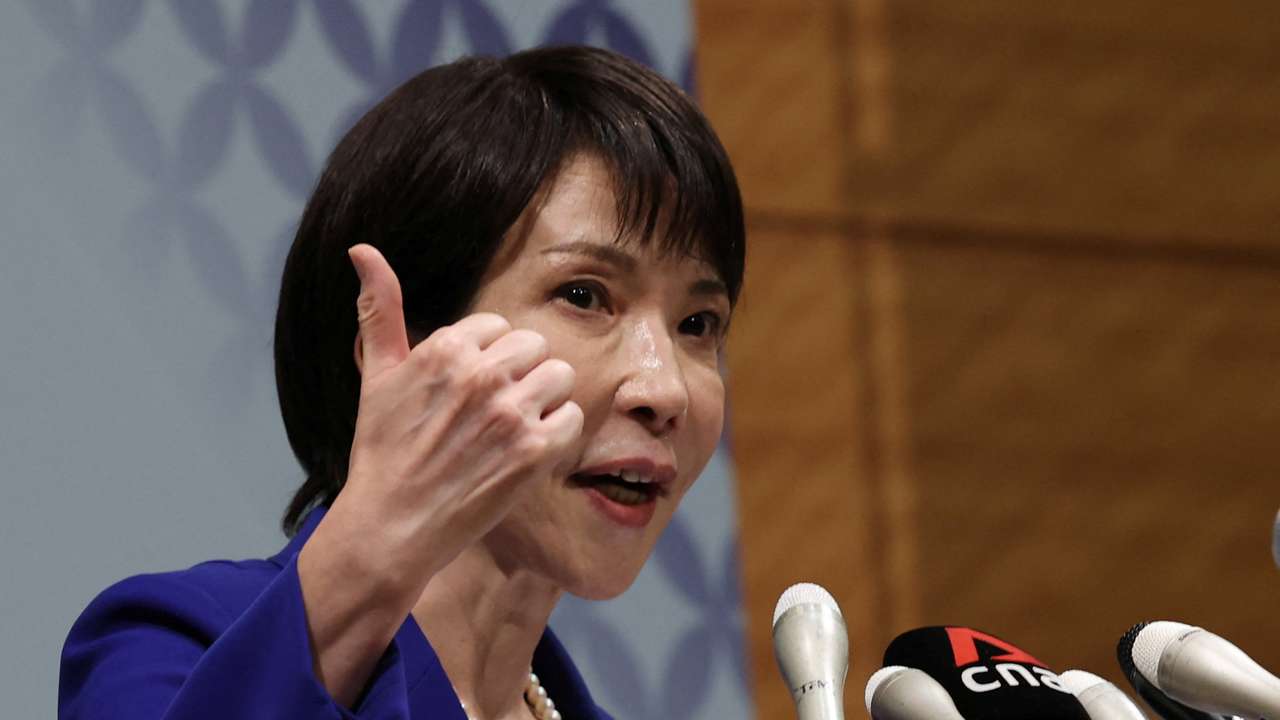
Japanese Prime Minister Sanae Takaichi has seen her pledge to “work, work, work, work and work” named the country’s catchphrase of the year — a title that has drawn as much scrutiny as amusement.
The ultraconservative leader first uttered the line in October as she accepted the leadership of the ruling Liberal Democratic Party, prompting both concern and support over her hard-driving mantra.
Receiving the award this week from a private committee, Takaichi insisted her remark had been misunderstood.
“I only wished to convey my enthusiasm,” she said. “I have no intention of encouraging overwork or suggesting that long hours are a virtue. I hope there is no misunderstanding.”
Since taking office later that month as Japan’s first female prime minister, Takaichi has become an unexpected style icon.
But while “Sana-katsu” — rooting for Sanae — is now a trend among younger women, it remains to be seen whether her conservative policies will attract the same loyalty.
Takaichi is seeking to woo right-wing voters after the LDP’s heavy losses under her more moderate predecessor, Shigeru Ishiba.
Her original “work” refrain came during a pledge to rebuild the struggling party and restore public trust. Urging colleagues to “work like a horse,” she declared she would abandon any notion of “work-life balance,” adding with deliberate emphasis: “I will work, work, work, work and work.”
Her own schedule has only fuelled concerns.
Colleagues say she keeps punishing hours; she held a 3 a.m. meeting with aides before parliament convened in November and told MPs she sleeps “about two hours now, four at most” while also caring for her husband, who is recovering from a stroke.
Takaichi’s prominence as a role model is unusual in Japan, where adoration of political figures rarely rivals the celebrity treatment reserved for athletes or pop stars. The enthusiasm, experts said, stems from her visibility as a powerful woman in a country with few female political leaders.
“She is a new kind of role model,” says Namiko Kubo-Kawai, a psychology professor at Nagoya Shukutoku University. “Her appeal is not rooted in traditional femininity but in her position and persona. Young women who never imagined cheering for a prime minister now see someone whose style they can emulate.”
Yet Takaichi is unlikely to win over feminists, being a staunch conservative who backs maintaining male-only imperial succession and opposes reforms allowing married couples to keep separate surnames.
Still, as Japan’s first female leader, Takaichi has become a cultural presence as much as a political one. Her catchphrase may have been unintended, but it has captured a moment where Japanese women — whether or not they share her politics — are expanding the kinds of role models they choose to follow.
This story is written and edited by the Global South World team, you can contact us here.