Mapping Asia: The six regions that shape the world’s biggest continent
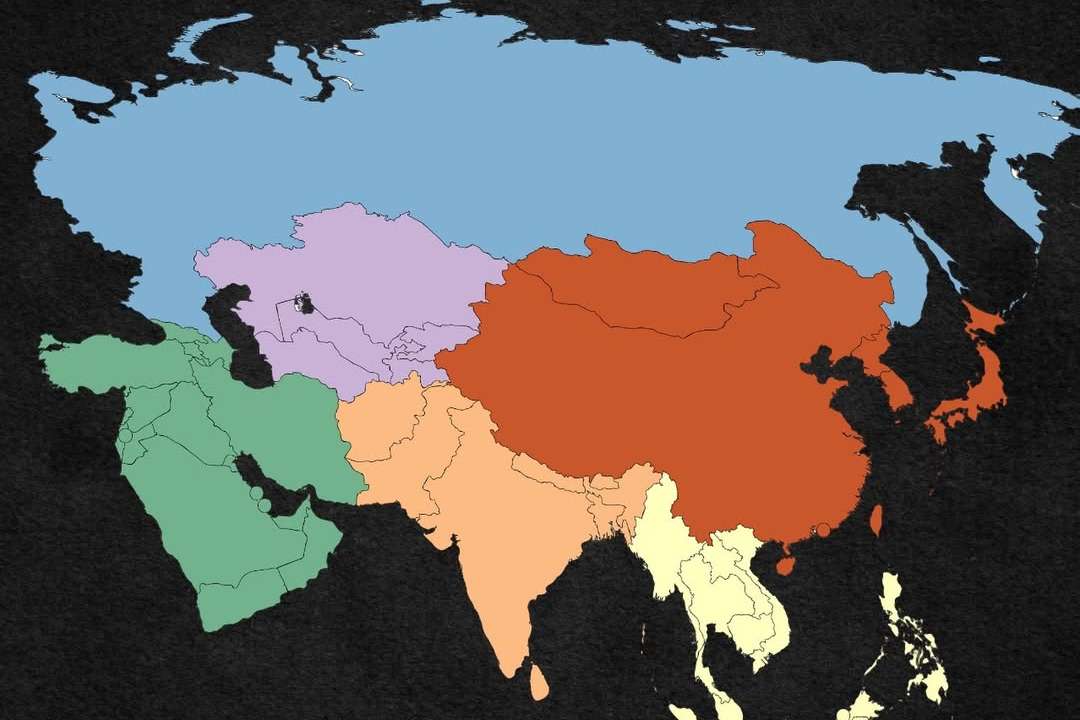
Asia, the world’s largest continent, is often divided into six distinct regions to better understand its vast geography, cultures, and economies. A new visualisation highlights these divisions: East Asia, South Asia, Southeast Asia, Central Asia, West Asia, and North Asia.
The United Nations describes Asia as the most populous continent, home to 4.7 billion people (nearly 60% of the world’s population). It stretches from the deserts of the Middle East to the high peaks of the Himalayas and the dense cities of East Asia.
Each region contributes differently to global trade, politics, and culture, making Asia not only the largest but also the most diverse continent in the world.
East Asia
Countries: China, Japan, South Korea, North Korea, Mongolia, Taiwan
East Asia is home to some of the world’s largest economies, including China and Japan. The region combines ancient civilisations with modern megacities, and it plays a central role in global manufacturing and technology.
South Asia
Countries: India, Pakistan, Bangladesh, Nepal, Bhutan, Sri Lanka, Maldives
South Asia is one of the most populous regions on Earth. India alone is the world’s most populated country (UN, 2023). The region faces challenges such as poverty and climate change, but remains vital in global IT, textiles, and cultural exports.
Southeast Asia
Countries: Thailand, Vietnam, Indonesia, Philippines, Malaysia, Singapore, Myanmar, Cambodia, Laos, Brunei, Timor-Leste
This region is marked by economic dynamism and cultural diversity. With over 600 million people, it is a hub for trade, tourism, and digital economies. According to the Asian Development Bank, Southeast Asia is one of the fastest-growing regions in the world.
Central Asia
Countries: Kazakhstan, Kyrgyzstan, Tajikistan, Turkmenistan, Uzbekistan
Landlocked and historically tied to the Silk Road, Central Asia is rich in natural resources like oil and gas. It also serves as a geopolitical crossroads between Russia, China, and the Middle East.
West Asia (Middle East)
Countries: Turkey, Iran, Saudi Arabia, UAE, Israel, and others in the Arabian Peninsula and Levant
Often referred to as the Middle East, West Asia is a strategic region due to its oil reserves and role in global energy supply. It is also the birthplace of major world religions, including Islam, Christianity, and Judaism.
North Asia
Countries: Russia (Asian part)
North Asia is vast and sparsely populated, dominated by Siberia. It is rich in natural resources, including oil, gas, and minerals, and plays an essential role in linking Europe and Asia.
This story is written and edited by the Global South World team, you can contact us here.