By Mark Trevelyan
When Belarusian leader Alexander Lukashenko used the full force of his security apparatus to smash mass demonstrations in 2020, Maria Kalesnikava became an icon of the protest movement.
Snatched off the street by masked officers on September 7 that year, the opposition campaigner was bundled into a van, driven to the border with Ukraine and threatened with expulsion "alive or in bits".
She tore her passport into small pieces to thwart the attempt to deport her. Later, at her trial, she smiled and danced in a courtroom cage. She was sentenced to 11 years on charges including conspiracy to seize power, and later placed on a list of "persons involved in terrorist activity".
On Saturday, Kalesnikava and 122 other people were released after negotiations between Lukashenko and John Coale, the special envoy of U.S. President Donald Trump, according to the U.S. embassy in Vilnius.
FLAUTIST-TURNED-POLITICIAN
Kalesnikava, now 43, was a flautist who spent 12 years living in Germany before making what she called an unlikely and unexpected entry into politics.
She was one of three women, all political novices, who joined forces to front the campaign against Lukashenko in a presidential election in 2020, after more prominent male candidates were prevented from running.
The other two, Sviatlana Tsikhanouskaya and Veronika Tsepkalo, both came forward in place of their better-known husbands. Kalesnikava had worked on the campaign of Viktar Babaryka, a banker who was jailed. The women agreed to unite behind Tsikhanouskaya as a consensus candidate.
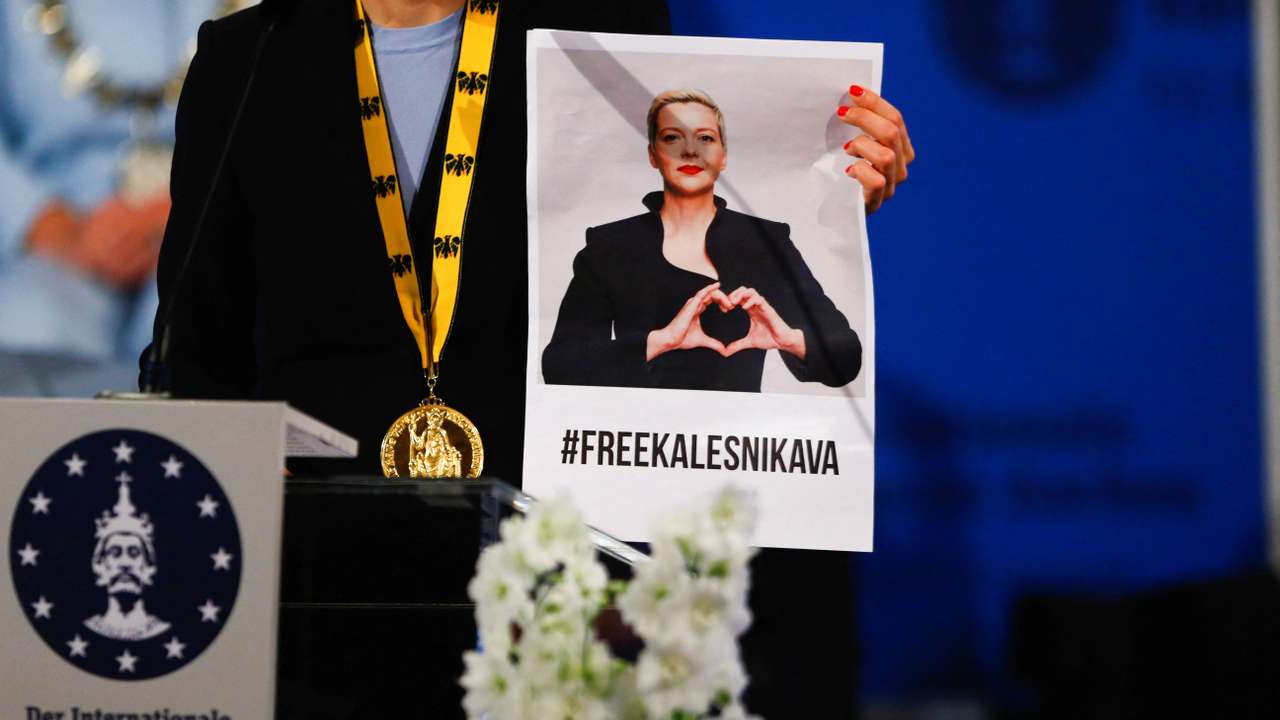
An image of the three - Tsikhanouskaya clenching her fist, Kalesnikava making a heart sign and Tsepkalo making a 'V' for victory - quickly spread. In the run-up to the vote, they drew crowds of tens of thousands, taking the authorities by surprise.
In her first political speech after the arrest of Babaryka, Kalesnikava appeared hesitant and lost her place in the text. But she grew in confidence, becoming a fiery public speaker. On the campaign trail, she told Reuters she sometimes wore dark glasses to mask her tears when she felt overwhelmed by support.
Lukashenko claimed victory in the election but Tsikhanouskaya accused him of rigging the count and stealing it from her. Western governments backed her claim, and the European Union and the United States both said they did not acknowledge Lukashenko as the legitimate leader of Belarus.
Mass pro-democracy protests broke out and thousands of people were arrested. Tsikhanouskaya, Tsepkalo and other opposition figures fled into exile, but Kalesnikava vowed to stay.
After her arrest, protesters took to the streets chanting her name and holding up placards, some reading "Viva Maria".
"Belarusian cops, sitting by the fire in the evening, frighten each other with stories about Maria Kalesnikava", went one joke doing the rounds about her defiance.
Kalesnikava was held incommunicado for most of her five years and three months in prison, unable to see or hear from her family or lawyers. In 2022, she underwent an operation for a peptic ulcer and peritonitis.
She spent long periods alone in a tiny, stinking cell where the toilet was a hole in the floor, according to information gleaned from prison sources by her family and supporters. They were told that letters sent to her had been torn up in front of her by prison staff.
Her sister Tatsiana Khomich told Reuters in 2024 that Kalesnikava's conditions amounted to torture, and her family feared for her life. She said her sister's weight had fallen dramatically because her ulcer meant she could not tolerate most prison food.
In November that year, Kalesnikava was allowed a brief visit from her father and photographs were released that appeared to show her in a prison hospital.
This article was produced by Reuters news agency. It has not been edited by Global South World.