NATO must be ready to respond to hybrid threats, top commander says
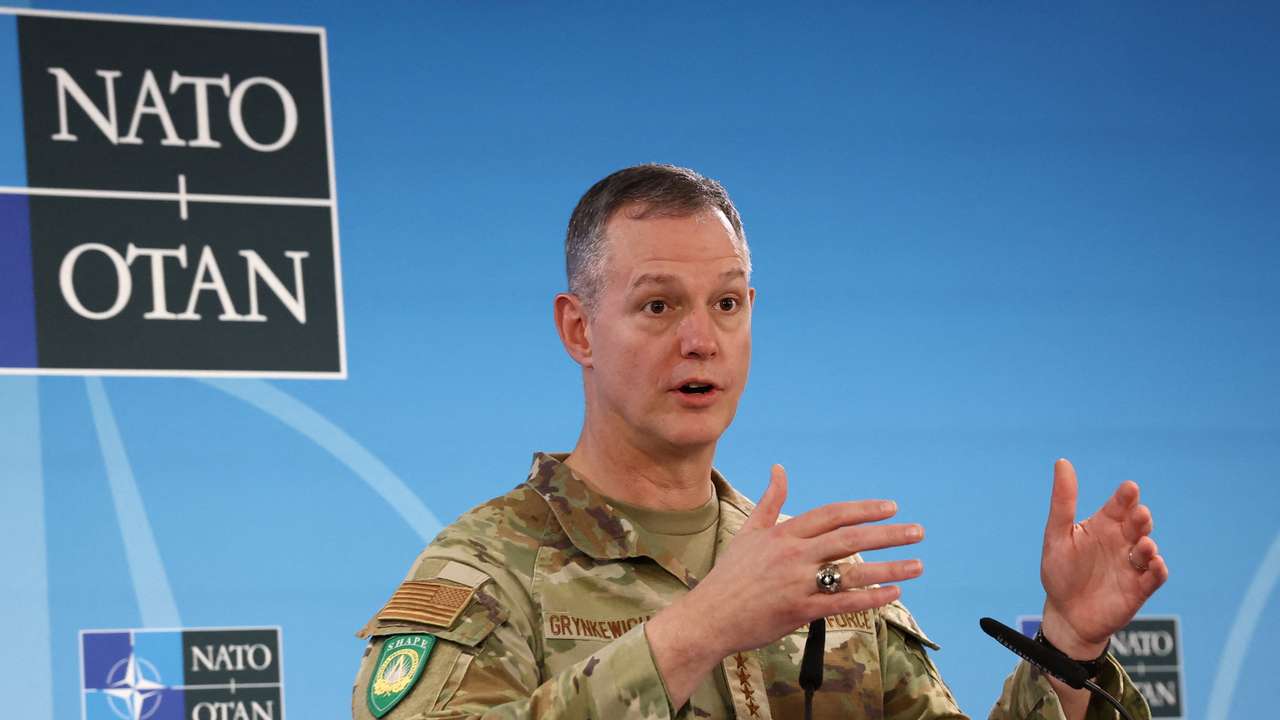
NATO must be ready to respond to increasing hybrid threats in order to defend its member states' territory, the alliance's top military commander said on Thursday.
Hybrid threats refer to both military and non-military tactics designed to undermine an adversary's security and typically include cyberattacks, disinformation campaigns, sabotage of key infrastructure and use of drones or irregular armed groups.
"Hybrid threats are a real issue, and I do think that we can anticipate more of that happening," Alexus Grynkewich, a U.S. Air Force general serving as NATO's Supreme Allied Commander Europe, told reporters at the alliance’s military headquarters outside the Belgian city of Mons.
Speaking of recent incidents in Europe, Grynkewich said some were reckless and some intentional. He said it was important to say who was behind hybrid incidents and that the alliance knew Russia was behind some of them.
"We also do think about being proactive... If Russia is attempting to provide dilemmas to us, then maybe there are ways that we could provide dilemmas to them," he said, adding that NATO was a defensive alliance and "there's nothing offensive about this".
Russia regularly denies accusations that it is behind drone incidents or cyberattacks affecting Western countries. It also denies any plans to attack NATO, which has been providing weapons, intelligence and other assistance to Ukraine since Moscow's 2022 invasion.
This article was produced by Reuters news agency. It has not been edited by Global South World.