Portugal general strike stalls transport, closes schools in labour reform protest
By Sergio Goncalves
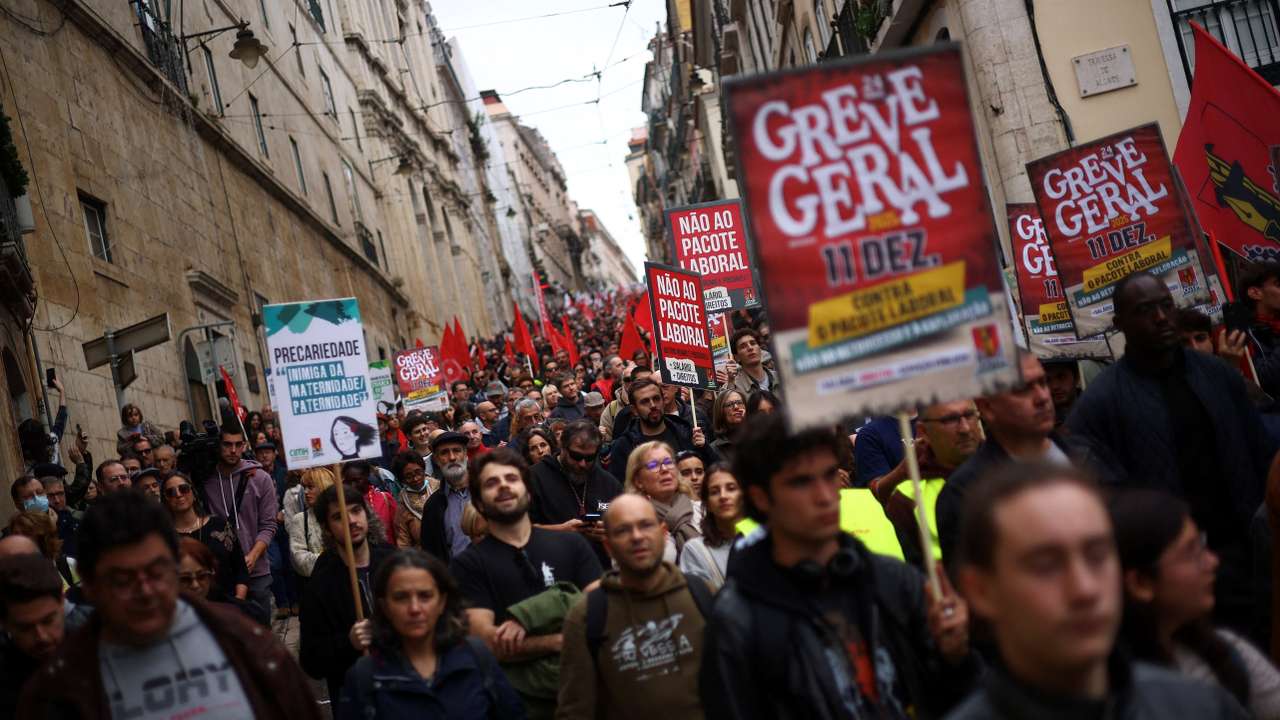
Train services ground to a halt across Portugal on Thursday, hundreds of flights were cancelled, and schools closed as unions launched a first general strike in more than a decade, in protest against proposed labour reforms.
The minority centre-right government says the proposed changes - amending more than 100 labour-code articles - aim to boost productivity and spur economic growth. But unions accuse it of tilting power toward employers at the expense of workers’ rights, despite a strong economy and low unemployment.
The bill, yet to be submitted to parliament, is expected to pass with backing from the far-right Chega party.
Some public transport operated due to minimum service requirements imposed by authorities, but Lisbon’s streets were noticeably quieter. While hospitals stayed open, most surgeries and appointments have been postponed as nursing staff walked out.
The government played down the impact and said workers in the private sector, who outnumber public sector employees roughly five to one, did not join the labour action, although some were affected by transport stoppages.
"The vast majority of the country is working ... This seems more like a partial public sector strike" than a general one, Cabinet Minister Antonio Leitao Amaro told a news briefing.
Unions, however, cited disruptions at several large companies, including the auto industry hub around Volkswagen's Autoeuropa plant near Lisbon, where the morning shift downed tools.
"The government is only trying to minimise the impact of the strike to continue pushing its political agenda, but the workers will certainly resist, as they are doing now," Tiago Oliveira, secretary-general of the umbrella union CGTP, told reporters, adding that a "major general strike" was underway.
FIRST STRIKE SINCE BAILOUT ERA
Called by the largest unions CGTP and UGT, the one-day action is the first general strike since June 2013, when Portugal was under harsh austerity measures imposed by an international bailout that cut wages and lifted taxes.
The labour reforms envision easing just-cause dismissals in small- and medium-sized businesses and lifting limits on outsourcing. Other contentious measures include capping flexible-work rights for breastfeeding mothers at two years.
The government has refused to back down and insists the changes will ultimately benefit all Portuguese. Prime Minister Luis Montenegro pledged on Wednesday that his administration "will not give up on being reformist and transformative".
Some of the people who still went to work on Thursday said they had little choice, even if they sympathised with the strike.
"I don't have a permanent contract. I can't go on strike," 32-year-old stationery store worker Joao Silva told Reuters.
"They want to fire older people so they can hire younger people...with lower salaries... Why do (labour changes) always have to be in favour of company profits?" he said.
This article was produced by Reuters news agency. It has not been edited by Global South World.