What gasoline is called around the world and what it reveals about language
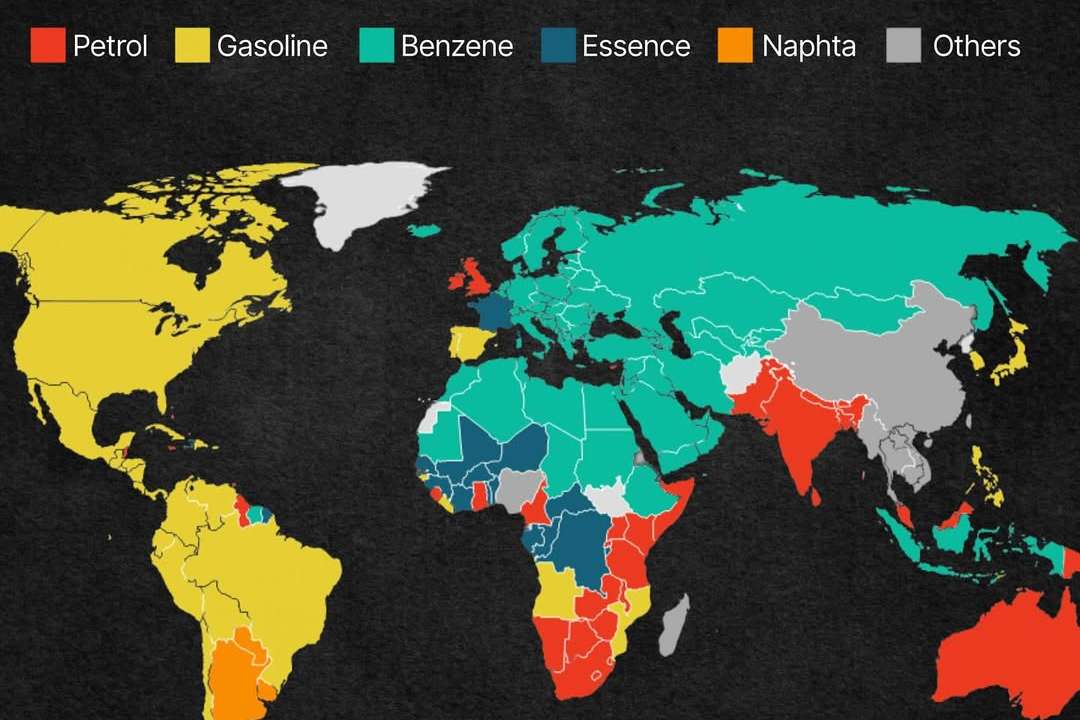
A new map released by World in Maps sheds light on how different countries around the world refer to gasoline, revealing not just linguistic preferences but also the lingering effects of colonial history and regional influences.
The terminology for automotive fuel varies significantly by region. The word "petrol" is widely used in the United Kingdom, India, Australia, South Africa, and many other former British colonies, which reflects the legacy of British English.
On the contrary, "gasoline" is standard in the United States, Canada, and much of Central and Latin America, aligning with American English usage.
In Russia, Eastern Europe, and some parts of Asia, the term "benzene" (or variants like benzin and benzina) is common. This stems from early petrochemical terminology and linguistic ties to German and Slavic languages.
Meanwhile, "essence" is the preferred term in France and many Francophone African nations, derived from historic French terminology related to refined petroleum spirits. In Argentina, Uruguay, and Paraguay, "naphtha" (or naphta) is used, a reference to historic names for hydrocarbon distillates.
Several other nations employ unique terms based on local dialects or historical usage. Despite the differences in naming, all terms refer to the same product —refined hydrocarbon fuel designed for spark-ignition engines.
“Gasoline” originated in mid-19th-century North America, combining “gas” with chemical suffixes such as -ol or -ene. “Petrol” traces back to the Latin petroleum, meaning “rock oil,” and was commercialised by British refiners in the 1800s.
“Benzene” and its derivatives were adopted across German and Slavic-speaking nations due to the prominence of early industrial chemical classification. Similarly, “essence” has long been associated with French linguistic traditions and marketing language.
This story is written and edited by the Global South World team, you can contact us here.