What’s selling in fine art today
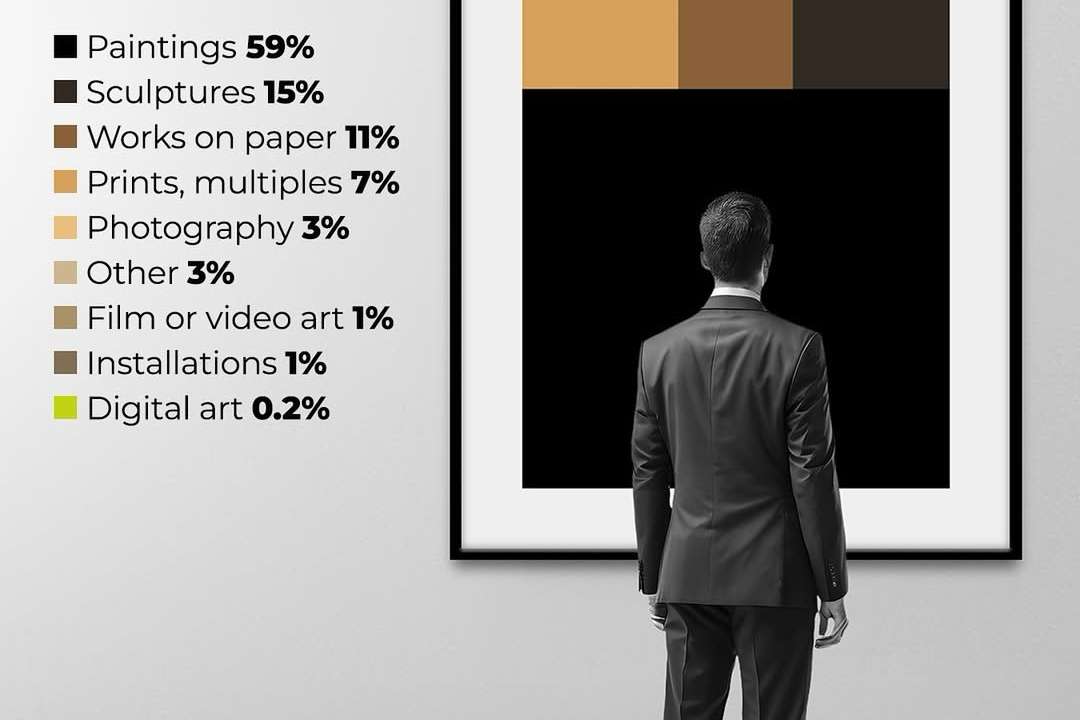
The fine art market has long been a space of evolving tastes, mediums, and collecting trends. But according to a recent report visualised by World Visualized, paintings continue to dominate fine art sales, accounting for 59% of the market.
This visual snapshot gives us an insightful breakdown of what collectors are purchasing—and it offers clues into why some art forms still outperform others.
Top-selling fine art categories
Here's how the fine art market breaks down:
- Paintings – 59%
- Sculptures – 15%
- Works on paper – 11%
- Prints, multiples – 7%
- Photography – 3%
- Other – 3%
- Film or video art – 1%
- Installations – 1%
- Digital art – 0.2%
Why paintings lead the pack
Paintings have always been seen as the quintessential form of fine art. Their enduring value stems from several factors:
- Historical prestige: Paintings have been the centerpiece of art collections for centuries, from Renaissance masterpieces from Leonardo da Vinci and Michelangelo to modern icons.
- Visual impact: A painting can transform a space and serve as a status symbol, which makes it attractive to both private collectors and corporate buyers.
- Tangible uniqueness: Unlike digital art or prints, each painting is often a one-of-a-kind piece, adding to its exclusivity and value.
Sculptures and works on paper: Strong but Specialised
Sculptures (15%) and works on paper (11%) follow behind. These categories attract more seasoned collectors due to their physicality, fragility, and often higher storage or shipping costs. Works on paper are more affordable entry points into collecting but may not carry the same long-term investment potential.
Digital art lags at 0.2%
Despite the hype around NFTs and digital creativity, digital art only accounts for 0.2% of the market. This might seem surprising, but it highlights ongoing concerns:
- Lack of physical presence: Collectors often prefer art they can physically display.
- Uncertain long-term value: Digital art markets are still developing standards for authenticity and resale.
- Market volatility: The NFT boom and bust cycles have made investors cautious.
Emerging opportunities
Film, video art, and installations remain niche categories (each around 1%) due to high presentation requirements and lower commercial adaptability. However, institutions and avant-garde collectors are slowly growing their presence in these areas.