Yemen Roundup: $13.8m humanitarian aid from Japan, UN pushes for de-escalation, talks with the US
Japan pledges $13.8m in humanitarian aid to Yemen
The Japanese government has announced a $13.8 million humanitarian aid package for Yemen, targeting urgent needs such as food security, healthcare, and essential services. The support comes as the country continues to face one of the world’s worst humanitarian crises, with millions affected by conflict, displacement, and malnutrition. Japan reaffirmed its commitment to working with international partners to ensure effective aid delivery and support Yemen’s long-term stability.
Intense political efforts aim to ease tensions in Eastern Yemen
Yemen is experiencing increased political engagement to ease tensions in its eastern provinces, where rival forces have competed for influence amid fragile security. President Rashad Al-Alimi emphasised that strengthening state institutions is the top priority, describing effective governance as key to stability and lasting peace. The efforts come as local and regional actors push dialogue to prevent escalation in Hadramout and Al-Mahra, where recent frictions have raised concerns over security and cohesion.
Yemen’s future after the STC’s eastward expansion
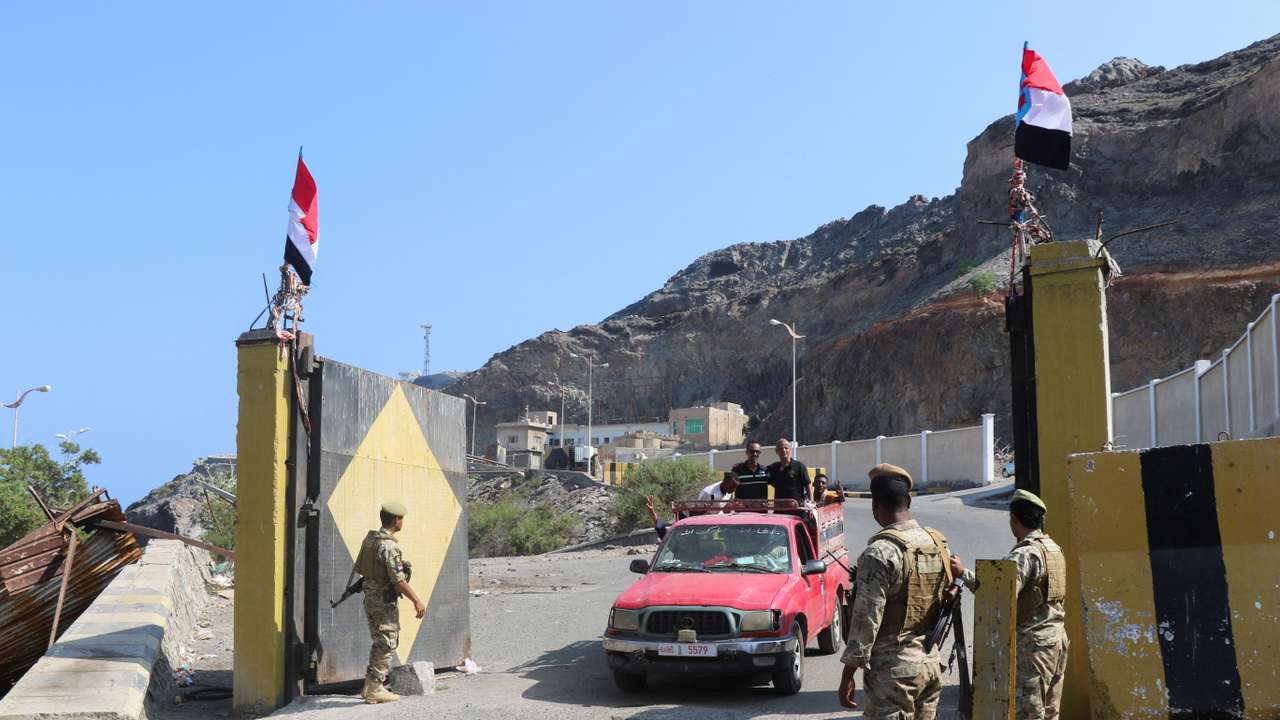
Yemen’s Southern Transitional Council (STC) is expanding its influence in the eastern governorates of Hadramout and al-Mahra, underscoring the fragmented nature of the country’s decade-long conflict. The advances highlight how power in Yemen now extends beyond the government–Houthi divide, with multiple de facto authorities competing over security and resources. Backed by a regional power, the STC has emerged as the dominant force in the south and parts of the east, even as the government struggles to assert unified control and the economy deteriorates. Against this backdrop, President Rashad al-Alimi described the reported suspension of IMF activities as a warning sign of the political and economic costs of escalating tensions in the east.
Al-Arada discusses latest developments with the U.S. ambassador
President Rashad Mohammed al-Alimi met with U.S. Ambassador Steven Fagin to discuss bilateral relations, recent developments in Yemen’s eastern governorates, and U.S. support for government reforms. The talks also covered counterterrorism cooperation and efforts to deter the Iran-backed Houthis. Al-Alimi praised strong U.S. support for Yemen, including the designation of the Houthis as a Foreign Terrorist Organisation and backing for economic and political reform initiatives.
UN envoy urges de-escalation in Yemen’s eastern provinces
UN Special Envoy to Yemen Hans Grundberg has urged immediate de-escalation in the eastern provinces of Hadramout and Al-Mahra, citing concerns over rising instability and its potential impact on local communities and regional security. Speaking in Riyadh, he called on all parties to exercise restraint and engage in dialogue, stressing that stability in the east is essential to advancing Yemen’s broader peace process.
This story is written and edited by the Global South World team, you can contact us here.