Understanding the Israel-Gaza conflict: Causes and international perspectives
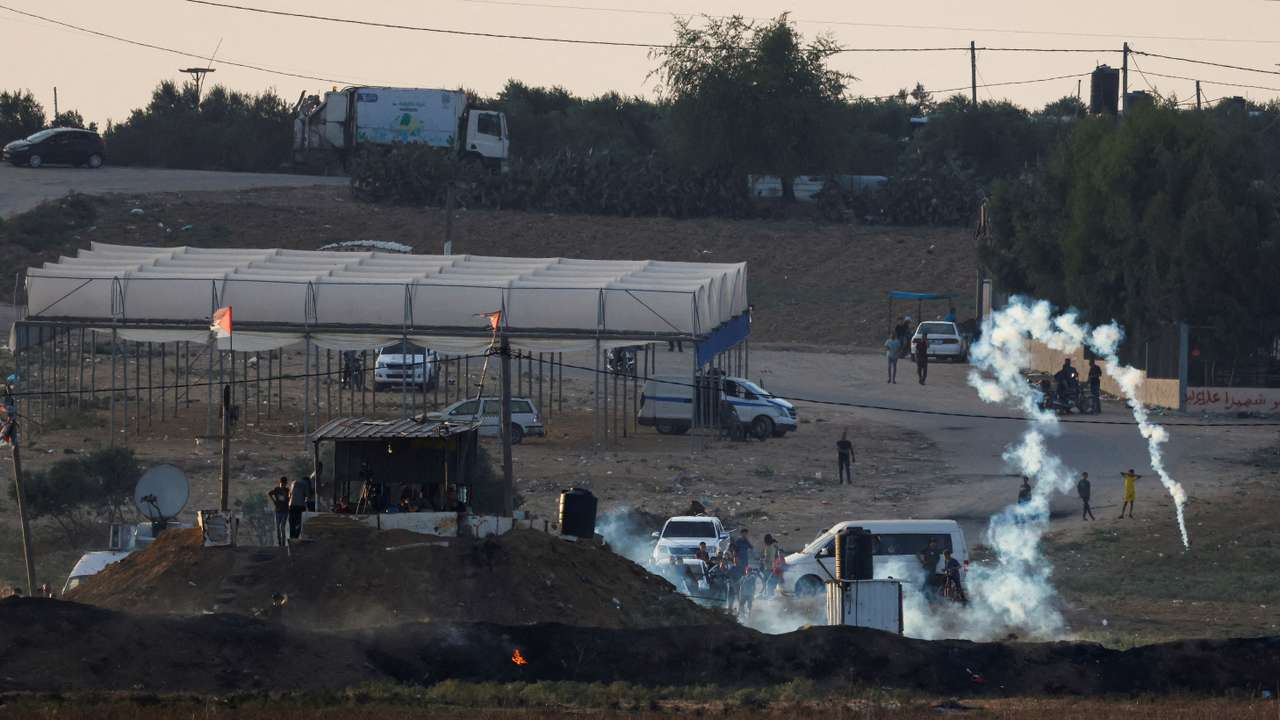
The Israel-Gaza conflict is a complex and enduring issue that has been marked by decades of tension and violence.
The conflict is characterized by the animosity between Israel and the Palestinian territory of Gaza, which is under the rule of Hamas, an Islamist group that calls for Israel's destruction and is designated as a terrorist organization by the UK and many other nations.
The roots of this conflict can be traced back to the 2006 Palestinian elections, which resulted in a victory for Hamas.
In 2007, Hamas took control of Gaza, ousting the rival Fatah movement led by President Mahmoud Abbas in the West Bank.
Since then, this power struggle has given rise to multiple wars between militants in Gaza and Israel. Israel, alongside Egypt, has maintained a partial blockade on Gaza, aimed at isolating Hamas and preventing indiscriminate rocket attacks on Israeli cities.
Palestinians in Gaza view these restrictions and Israeli air strikes on densely populated areas as collective punishment.
2023 has seen a surge in violence in the occupied West Bank and East Jerusalem, resulting in the deadliest year on record for Palestinians. They allege that Israel's military actions in response to attacks on Israelis and the restrictions in these regions have increased tensions.
Hamas's recent attack, which escalated the conflict, may have been driven by these tensions, as well as an attempt to gain popularity among Palestinians, possibly using hostages to pressure Israel into releasing Palestinian prisoners from its prisons, according to the BBC.
On the international front, the responses to the conflict vary. The United States, the European Union, and several Western countries have condemned the Hamas attack on Israel. The U.S., Israel's closest ally, has a longstanding history of providing significant military and economic aid to Israel.
Conversely, Russia and China have refrained from condemning Hamas and maintain contact with both sides. Russian President Vladimir Putin has attributed the absence of peace in the Middle East to U.S. policies. Iran, a staunch opponent of Israel, supports both Hamas and Hezbollah, which frequently clash with Israeli forces. Questions have arisen regarding Iran's role in the Hamas attack, although Tehran has denied any involvement.